Abstract
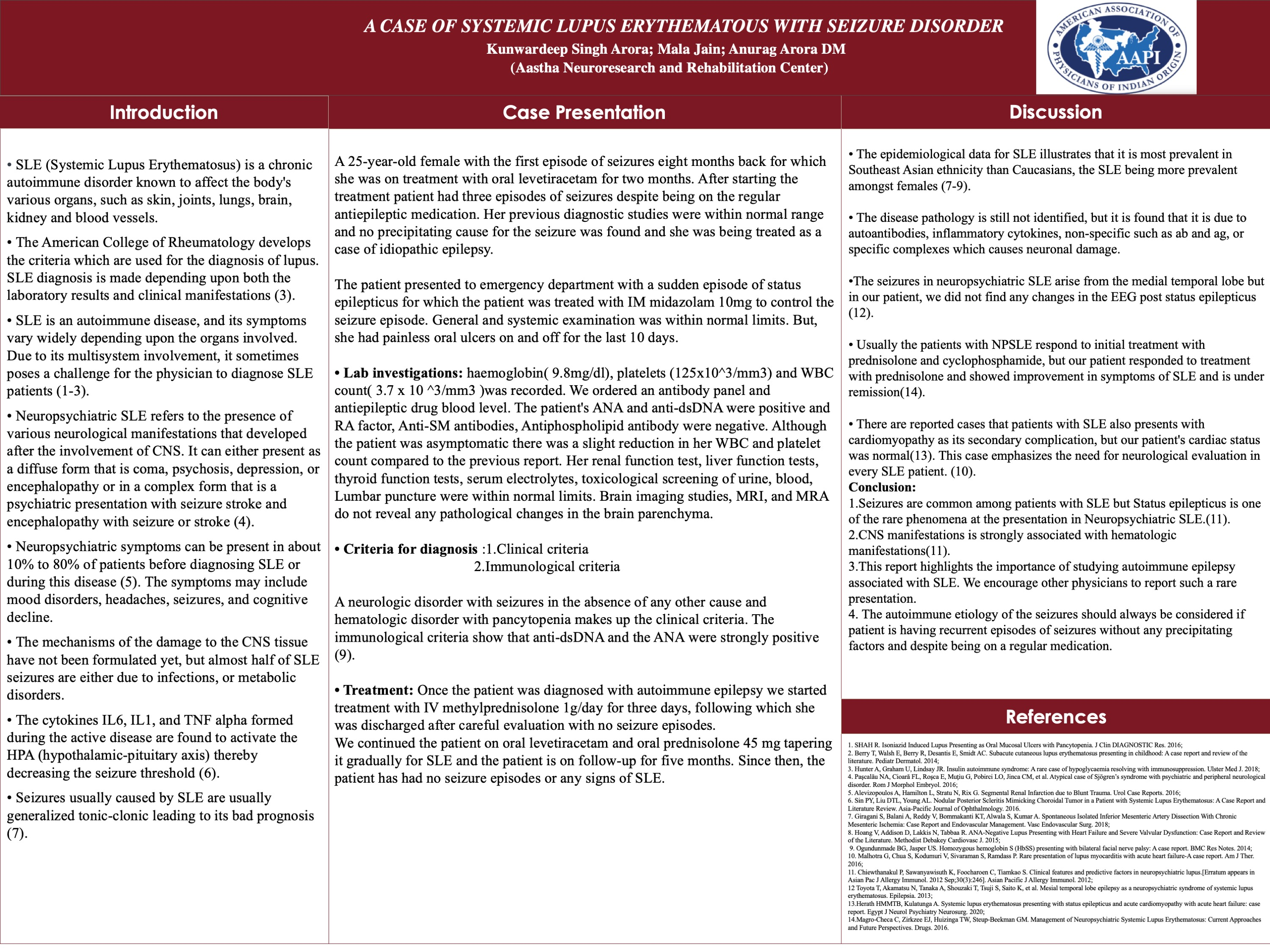
Background: Systemic lupus erythematosus (SLE) is an autoimmune systemic disease characterized by a broad spectrum of clinical manifestations that may also affect the central nervous system. A seizure is one of the most common Neuropsychiatric SLE manifestations of disorder yet potentially fatal disease.
Aim: The diagnosis of autoimmune epilepsy is often challenging and can be misdiagnosed as epileptic disorders or viral encephalitis. Autoimmune epilepsy has a strong association with systemic lupus erythematosus (SLE).
Case description: A 25-year female patient presented with recurrent seizures not responding to the standard anti-epileptic medications. After careful evaluation of the patient, she was found to have mouth ulcers, low WBCs, and low platelet counts. We ordered various investigations to rule out the causes of seizures. The tests included EEG, MRI, lumbar puncture showed no possible findings to explain the cause of status epilepticus. Additionally, we found out that ANA and anti-dsDNA were positive fulfilling the criteria for the diagnosis of SLE. Subsequently, we confirmed that seizures were one of the common symptoms among patients with (Neuropsychiatric SLE)NPSLE. Following which the patient was hospitalized for 10 days and was treated with methylprednisolone to which she responded and is being followed up and she showed no signs of recurring epileptic seizures and flares or symptoms of SLE.
Conclusion: The case report highlights the importance of studying autoimmune epilepsy associated with SLE. The autoimmune etiology of the seizures should always be considered if the patient is having recurrent episodes of seizures without any precipitating factors and despite being on regular medication. Moreover, this study shows that early diagnosis may be proved helpful in decreasing mortality and morbidity thereby letting effective treatment.