Abstract
Background: Burnout is defined as “a state of physical, emotional, and mental exhaustion to working conditions that are stressful, demanding, and lack of recognition.” High patient load, long working hours, and unreasonable demands from patients make medical practitioners vulnerable for stress and burnout.
Aim: The objective was to study the prevalence of burnout among medical practitioners and factors associated with burnout.
Materials and Methods: The study is an observational descriptive cross-sectional study conducted among medical practitioners in a tertiary care hospital. The sample studied 102. Study was conducted using the Maslach Burnout Inventory with additional questions on demographic factors, work experience, hours of work, and specialty. Data was entered in MS Excel 2007 and analyzed with SPSS 21 version software.
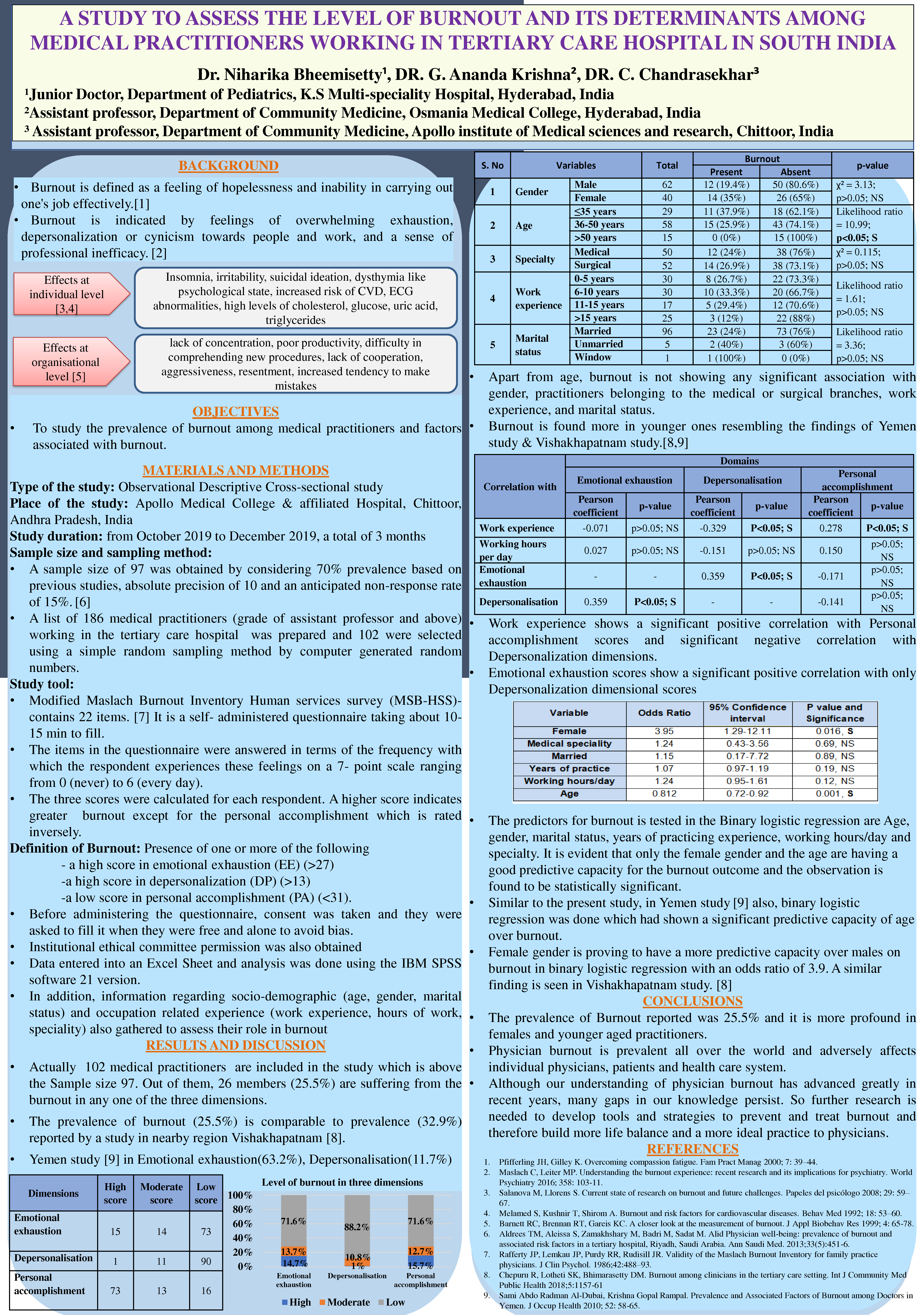
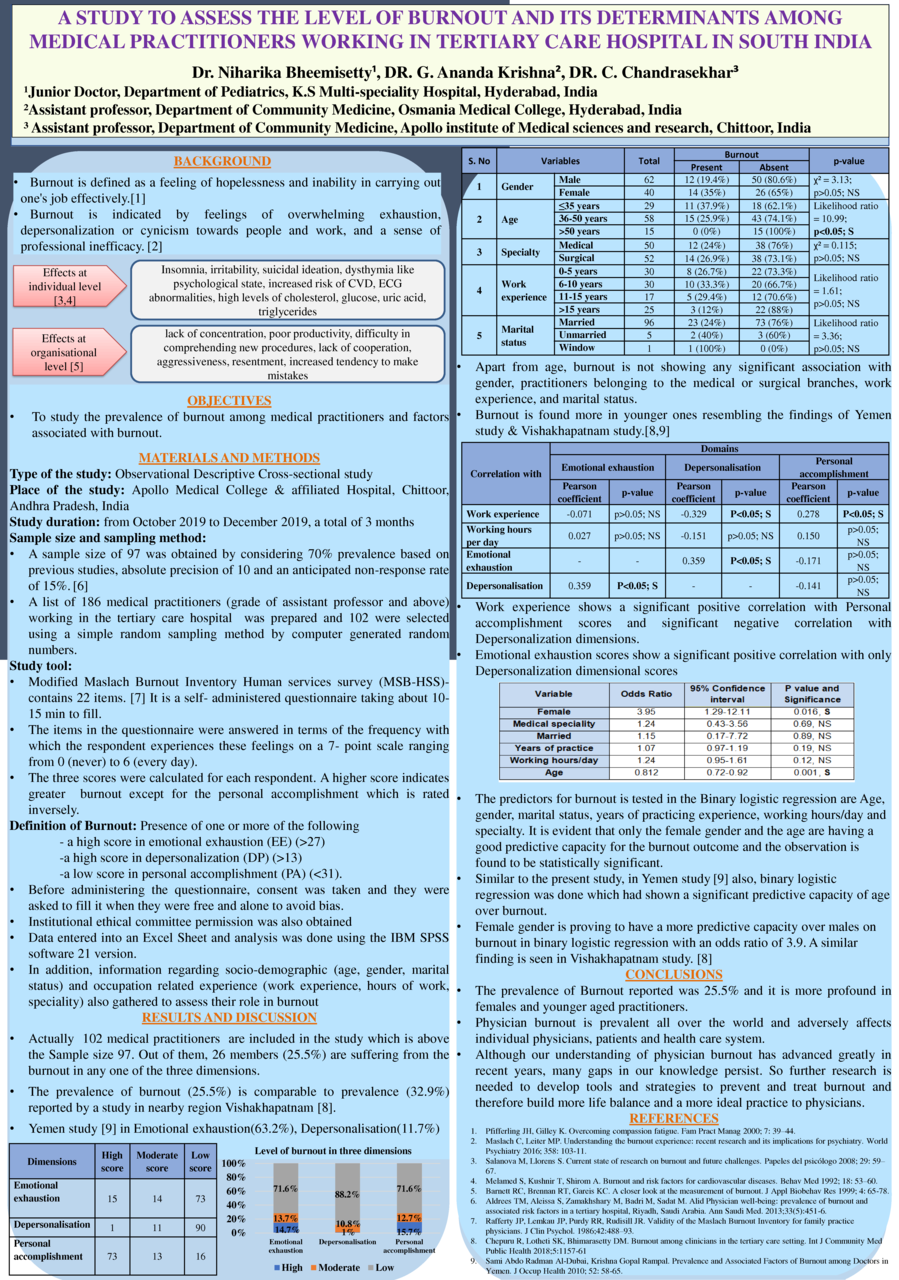
Results: About 26 (25.5%) members are suffering from burnout in any one of the three dimensions. Out of 102 subjects, it is found that in emotional exhaustion, 15 (14.7%) are experiencing high burnout, 14 (13.7%) members and 73 (71.6%) members are experiencing moderate and low levels of burnout respectively. But in the depersonalization dimension, just 1 (1%) member is experiencing high burnout whereas 11 (10.8%) members and 90 (88.2%) members are having moderate and low levels of burnout respectively. In the personal accomplishment dimension, 16 (15.7%) members revealed that they have high burnout, whereas 13 (12.7%) members and 73 (71.6%) members have shown that they have moderate and low levels of burnout respectively.
Conclusions: Burnout exists among medical practitioners, and measures should be taken to identify causes and take remedial actions.