A Selectable Floxed Dual Flourescence Reporter In Human Pluripotent Stem Cells: A Tool For Studying Cardiomyocyte Differentiation And Biomechanical Maturation
Abstract
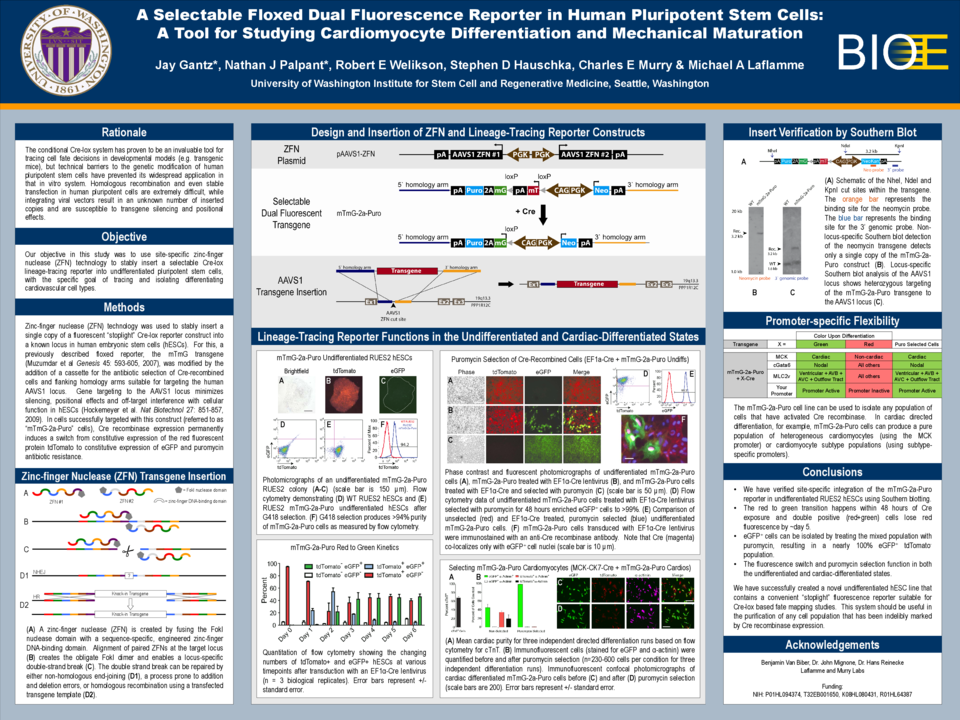
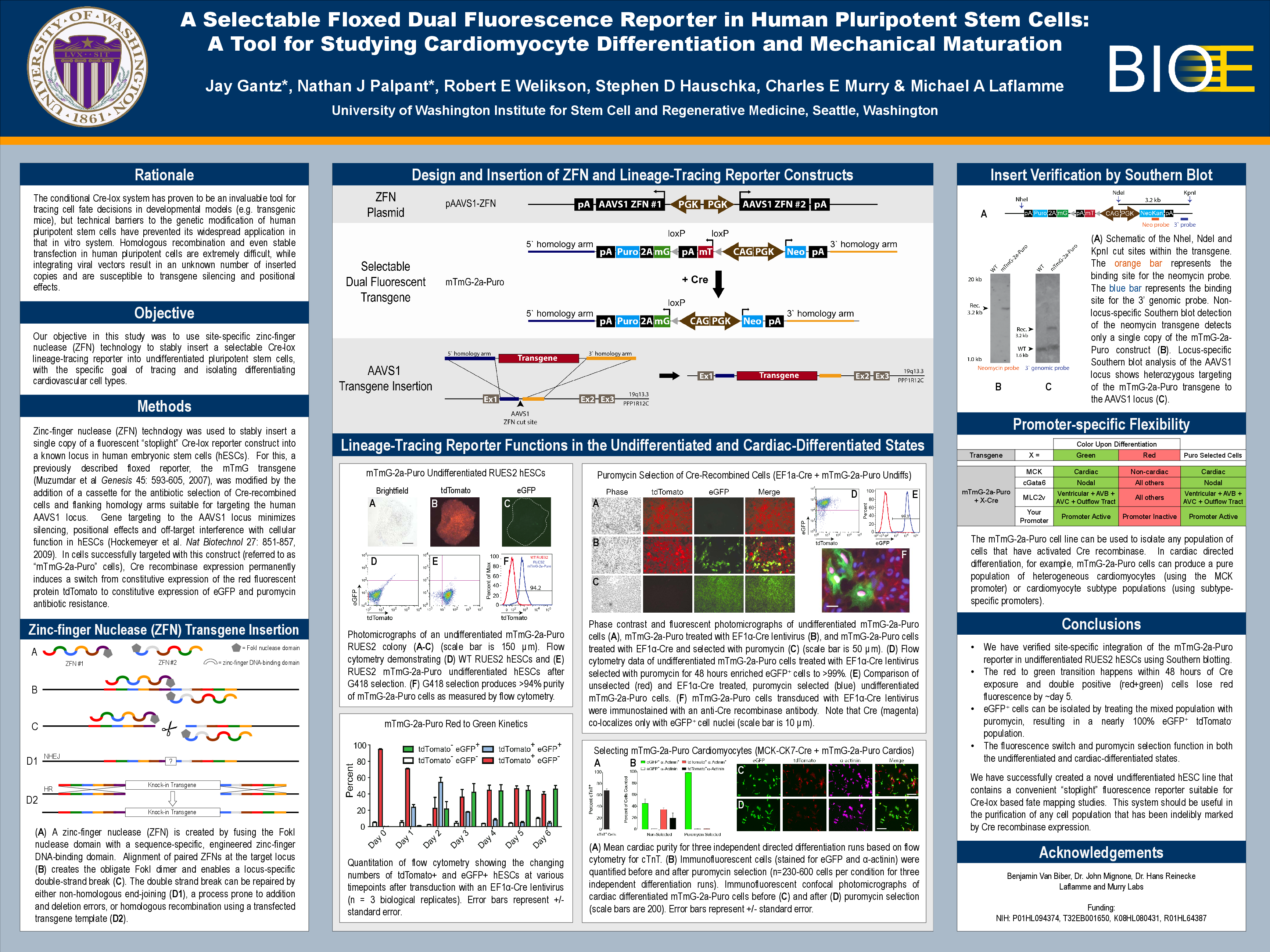
The conditional Cre-lox system has proven an invaluable lineage-tracing tool, but technical barriers to the genetic modification of human pluripotent stem cells have prevented its widespread use in these cells. Inclusion of an antibiotic resistance cassette in the Cre lox transgene would also facilitate the genetic
selection of cell populations otherwise marked by weak or transiently activated promoters (e.g. cardiac subtypes).
METHODS: Toward this end, we used zinc-finger nuclease technology to stably insert a single copyof a selectable “stoplight” Cre-lox reporter construct into the AAVS1 locus of human embryonic stem cells (hESCs) and human induced pluripotent stem cells (hiPSCs). A previously described floxed reporter, the mTmG transgene, was modified to allow puromycin antibiotic selection of Cre-recombined cells. In cells expressing this modified “mTmG-2a-Puro” transgene, Cre expression permanently induces a switch from constitutive expression of membranous tdTomato to constitutive expression of membranous eGFP and puromycin resistance.
RESULTS: The mTmG-2a-Puro reporter was successfully targeted to the AAVS1 locus in undifferentiated RUES2 hESCs and IMR90 hiPSCs as verified by Southern blot. The kinetics of the red-to-green
fluorescence transition after Cre-mediated recombination was measured by flow cytometry after transduction with an EF1α-Cre lentivirus. eGFP+ cells first appeared at 24 hours and became a distinct
population from tdTomato+ cells within three days. Subsequent puromycin selection yielded a ~100% eGFP+ tdTomato- cell population. We next transduced cardiac differentiated cultures (containing ~60%
cardiomyocytes) with lentivirus expressing Cre under the striated-muscle specific MCK-CK7 promoter, and, after puromycin selection, >98% eGFP+ α-actinin+ cardiomyocytes were obtained. In
addition to traditional methods, the resultant cardiomyocyte population is being characterized functionally in terms of biomechanical performance, using a novel 3D microtissue platform.
CONCLUSION: We have created novel undifferentiated hESC and hiPSC lines with a stably integrated, floxed “stoplight” fluorescence reporter that is suitable for fate mapping studies and the genetic selection of cardiomyocytes.
Related articles