The Effects of a Novel Drug, Methyl Jasmonate, on Photoreceptor Degeneration in a Model Organism, the PDE6C Zebrafish
Abstract
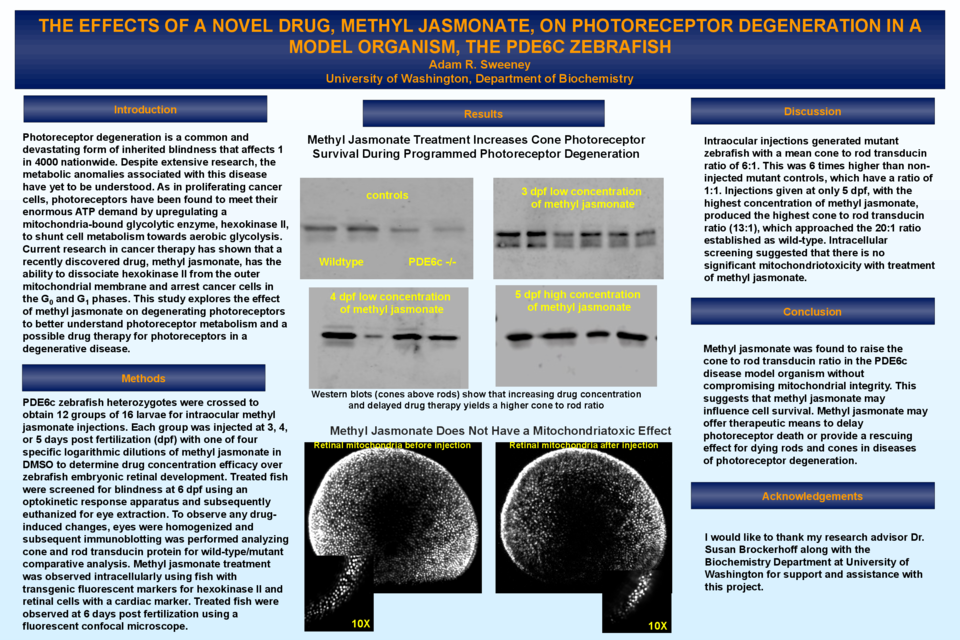
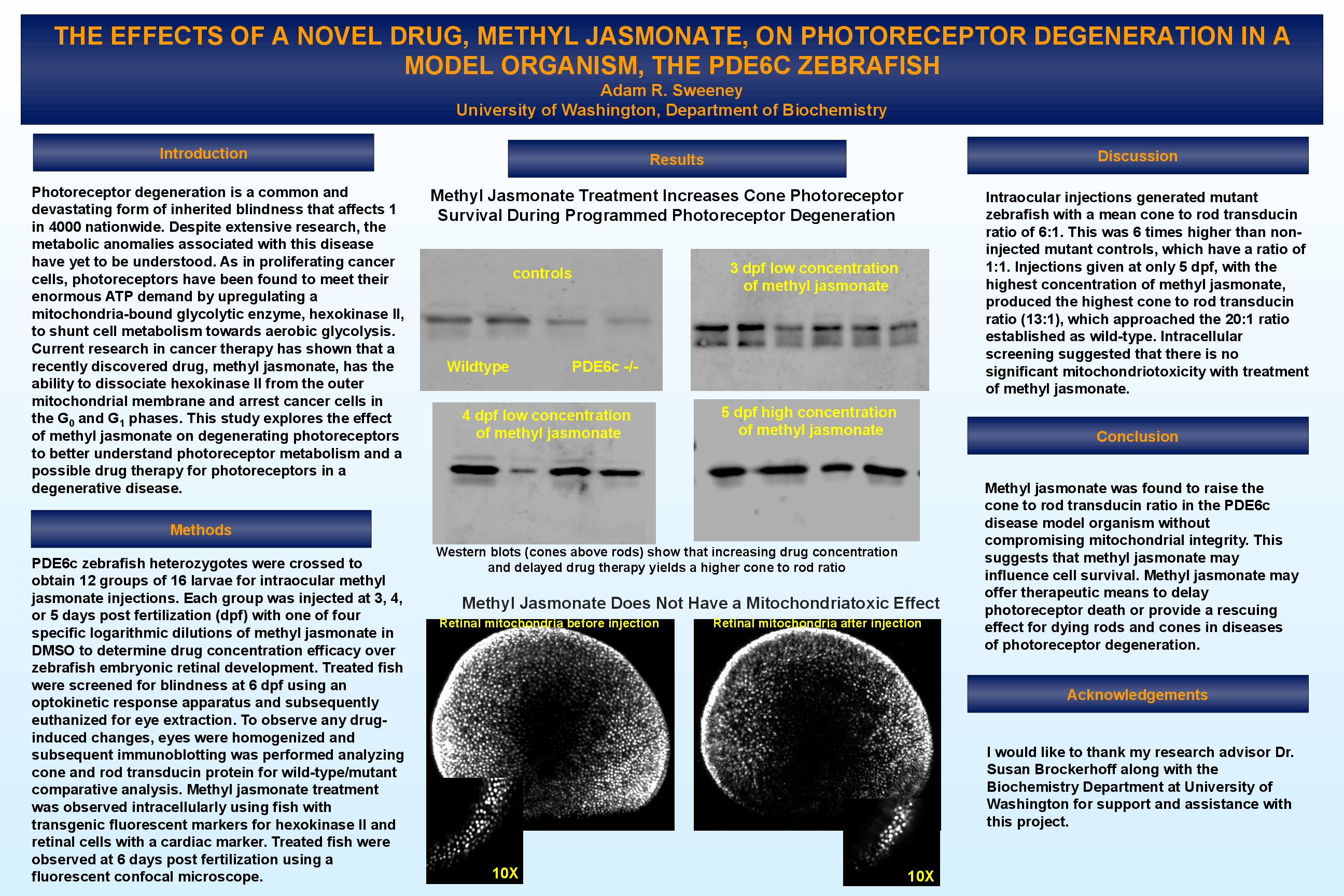
Photoreceptors use an extraordinary amount of energy supplied mostly by ATP from aerobic glycolysis. Similar to proliferating cancer cells, photoreceptors favor aerobic glycolysis by upregulating a mitochondrial bound enzyme, hexokinase II, to rapidly convert glucose to glucose-6-phosphate beginning glycolysis. In addition to its metabolic qualities, hexokinase II has also been found to regulate apoptosis in cancer cell lines. In recent studies, researchers have found a plant defense molecule, methyl jasmonate, to dissociate hexokinase from mitochondrial membranes. Using methyl jasmonate in experimental cancer therapy, research clinicians have witnessed tumor cell arrest in the G0 and G1 cell cycle phases while finding noncancerous cell lines sustain the ability to proliferate. Given the metabolic similarities between photoreceptors and proliferating cancer cells, this study explores methyl jasmonate’s saving ability on photoreceptors programmed for degeneration in the retinal disease model organism—the pde6c zebrafish mutant. Loss of PDE6c leads to constant cell depolarization. Considering the metabolic stressors of this constant photoreceptor depolarization, methyl jasmonate may have an ability to create a metabolic shift from aerobic glycolysis to oxidative phosphorylation and provide a rescuing effect to overstressed, dying photoreceptors. The results of this study suggest that methyl jasmonate could have a range of cell rescue in a model organism for photoreceptor degeneration. This novel drug therapy may give insight into further treatment options for retinal disease.
Related articles