Abstract
System Integration Simulation for the Implementation of a New Protocol: Organ Donation After Cardiac Death
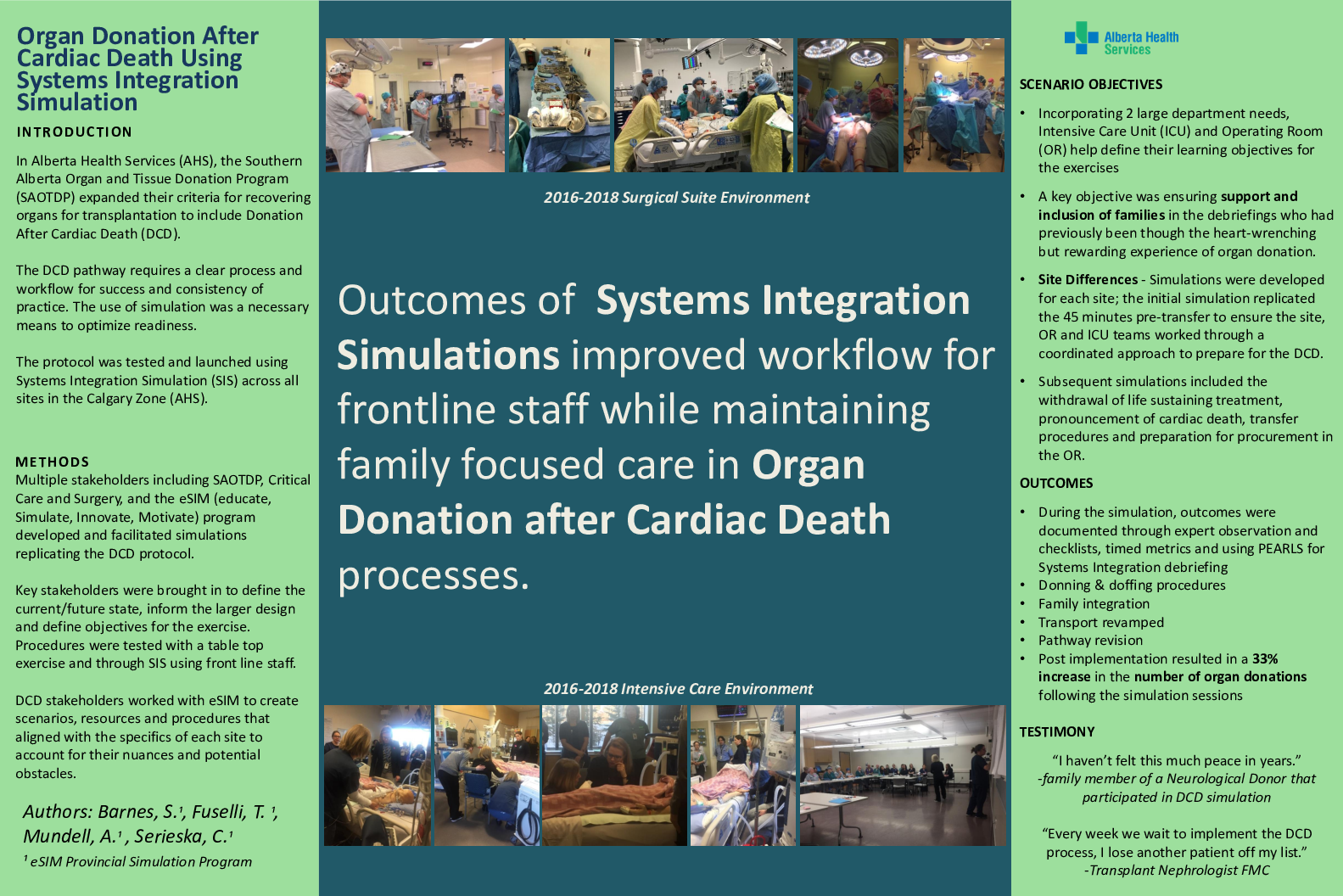
In Alberta Health Services (AHS), the Southern Alberta Organ and Tissue Donation Program (SAOTDP) expanded the opportunity of procuring organs from patients who have suffered neurological death to include donations post cardiocirculatory death (DCD).
Consistency of the practice of DCD processes ensures nil potential harm to patients, families, recipients and frontline team. As the DCD pathway requires an explicit process and workflow for success, the use of simulation was a necessary means to optimize readiness. The protocol was tested and launched using system simulation across all sites in the Calgary zone (AHS).
Multiple stakeholders including SAOTDP, Critical Care and Surgery, and the eSIM program developed and facilitated simulations replicating the DCD protocol. The stakeholders tested the procedures through a table top exercise, then through system simulations. Simulations were developed for each site; the initial simulation replicated the 45 minutes pre-transfer to ensure the site, OR and ICU teams worked through a coordinated approach to prepare for the DCD. Subsequent simulations included the withdrawal of life sustaining treatment, pronouncement of cardiac death, transfer procedures and preparation for procurement in the OR.
A key objective was ensuring support and inclusion of families in the debriefings who had previously been though the heart-wrenching but rewarding experience of organ donation. The DCD stakeholders group created scenarios, resources and procedures that aligned with the specifics of each site to account for nuances and obstacles. During the simulation, outcomes were documented through expert observation and checklists, timed metrics and using PEARLS for System Integration debriefing.
The system simulations were highly successful in implementation of the processes, as well as building awareness, change management and promotion of the DCD pathway. Approximately 80 stakeholders participated in the design, delivery and debriefing resulting in significant process improvements. The sessions ensured a quality approach to implementation of DCD processes, balancing the interests of potential donors, their families, potential organ recipients, and health care providers.
Since implementation of DCD the SAOTPD team reports a 33% increase in the number of organ donations.