Increased Continuous Glucose Monitoring (CGM) Receiver Interaction is Associated with Glycemic Benefit in Pediatric Patients
Abstract
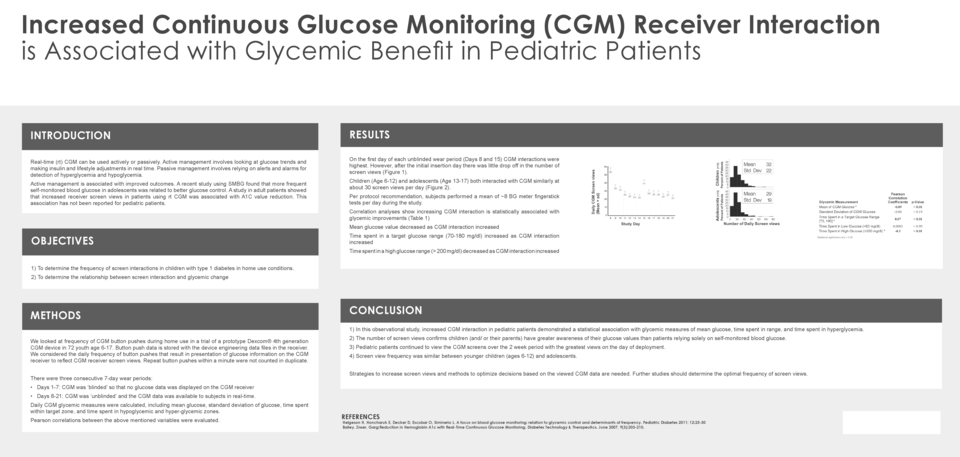
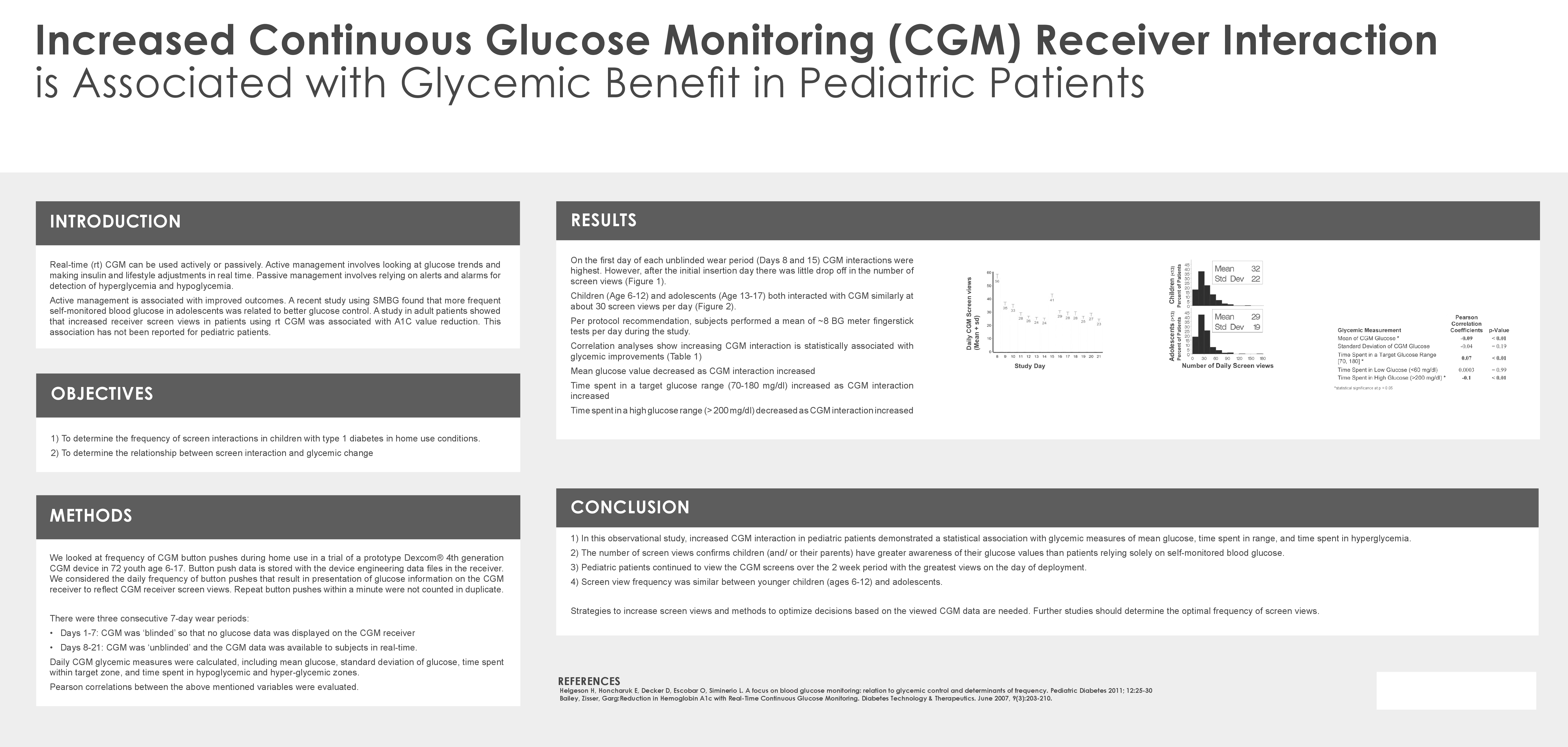
Increased CGM screen views have been associated with improved glycemic outcomes in adult patients. Whether this association holds in pediatric patients has not been reported. We looked at frequency of CGM receiver button pushes in 72 youth age 7-17 with an average baseline A1C of 8.3 at 3 US centers that were subjects in a home use performance study of a prototype Dexcom 7 day CGM system. Subjects were scheduled for three consecutive 7-day wear periods. In the initial period, subjects were blinded from glucose information. In the subsequent two periods, glucose data was un-blinded and CGM was used real-time (rt). In this retrospective analysis (Table), we independently assessed daily glycemic measurements during the un-blinded time period with CGM receiver screen views. We considered the daily frequency of button pushes that result in presentation of glucose information on the CGM receiver to reflect CGM receiver screen views. Repeat button pushes within a minute were not counted in duplicate.
Correlation analyses show increasing CGM receiver screen view frequency is associated with a statistically significant improvement in the time spent within a target glucose range (70-180 mg/dL), time spent high (> 200 mg/dL), and also in mean of CGM glucose (all p < 0.05). Neither time spent low (< 60 mg/dL) nor standard deviation of CGM glucose was found to have a significant association. Similar to adult patients, an increased frequency of receiver interaction in pediatric subjects using rt-CGM demonstrated association with glycemic improvement.
Related articles