Abstract
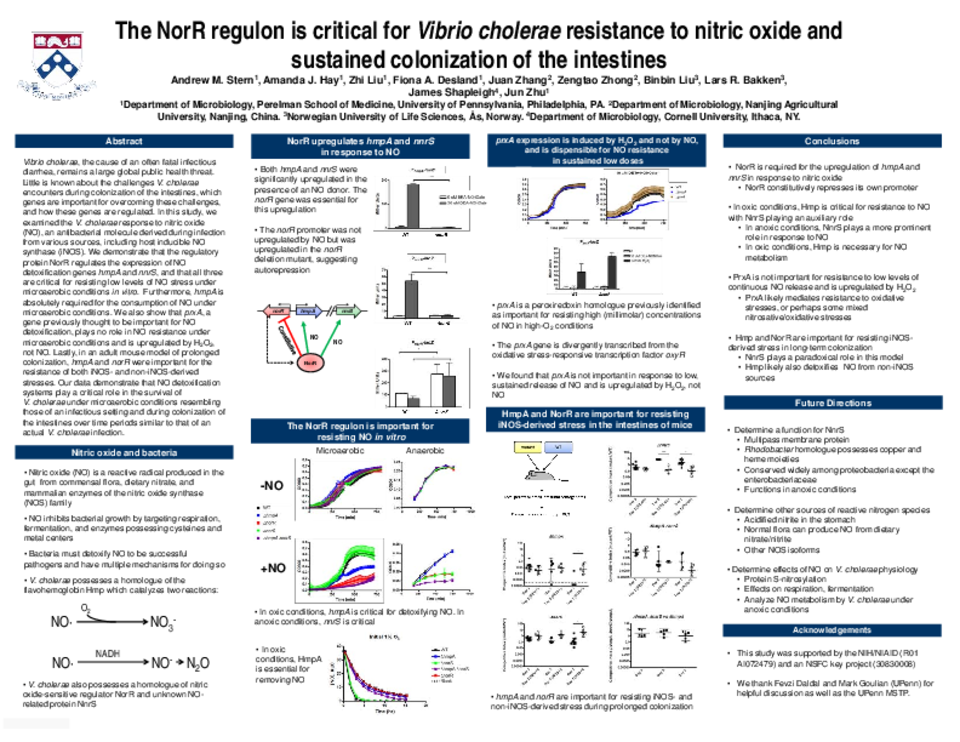
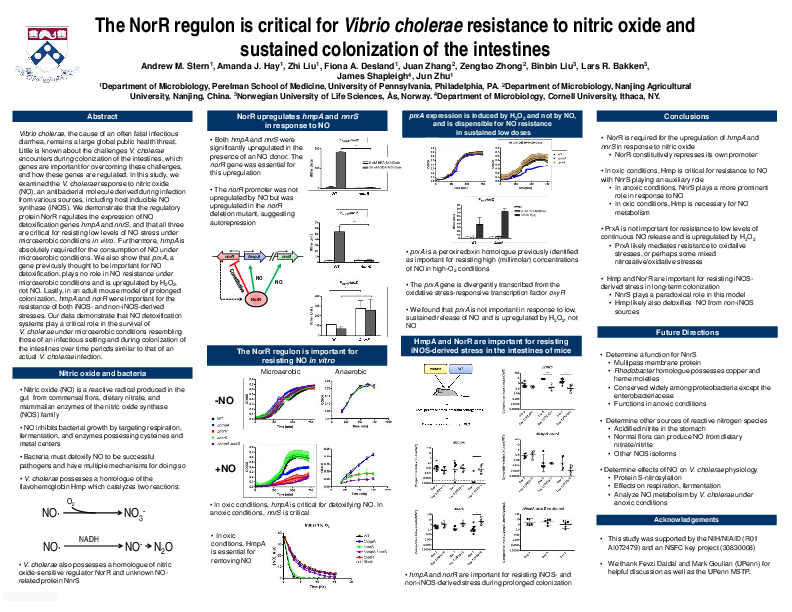
Vibrio cholerae, the cause of an often fatal infectious diarrhea, remains a large global public health threat. Little is known about the challenges V. cholerae encounters during colonization of the intestines, which genes are important for overcoming these challenges, and how these genes are regulated. In this study, we examined the V. cholerae response to nitric oxide (NO), an antibacterial molecule derived during infection from various sources, including host inducible NO synthase (iNOS). We demonstrate that the regulatory protein NorR regulates the expression of NO detoxification genes hmpA and nnrS, and that all three are critical for resisting low levels of NO stress under microaerobic conditions in vitro. Furthermore, hmpA is absolutely required for the consumption of NO under microaerobic conditions. We also show that prxA, a gene previously thought to be important for NO detoxification, plays no role in NO resistance under microaerobic conditions and is upregulated by H2O2, not NO. Lastly, in an adult mouse model of prolonged colonization, hmpA and norR were important for the resistance of both iNOS- and non-iNOS-derived stresses. Our data demonstrate that NO detoxification systems play a critical role in the survival of V. cholerae under microaerobic conditions resembling those of an infectious setting and during colonization of the intestines over time periods similar to that of an actual V. cholerae infection.