Abstract
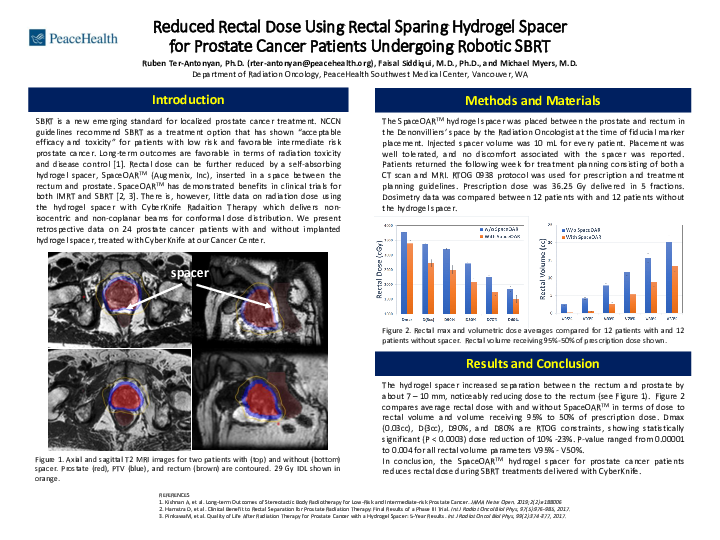
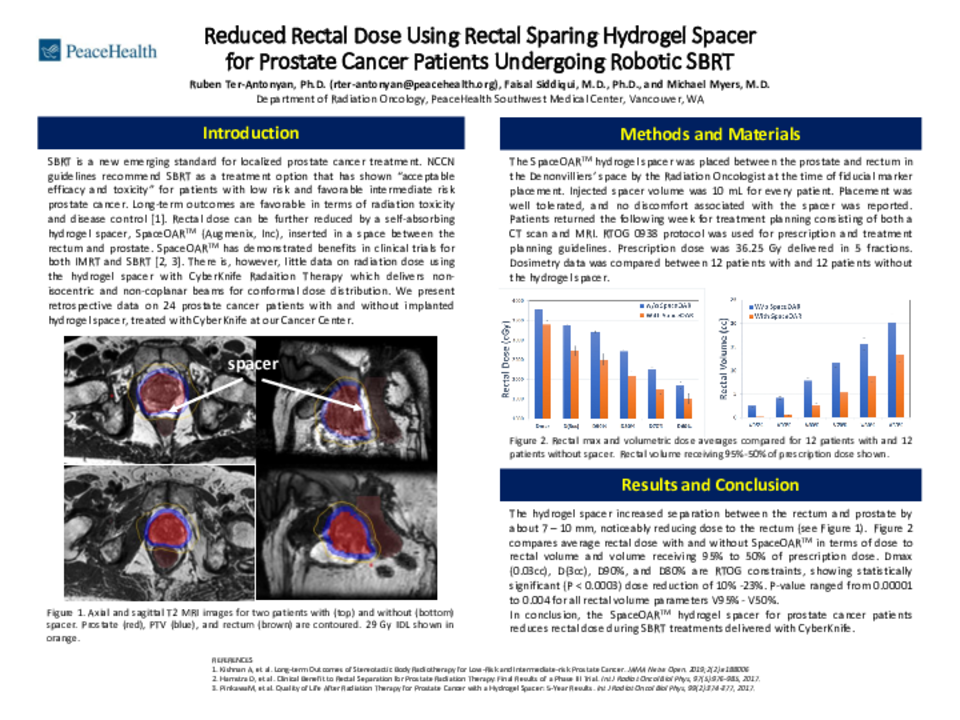
Objectives: Stereotactic Body Radiation Therapy (SBRT) is now a recommended treatment option for patients with low risk and favorable intermediate risk prostate cancer. A self-absorbing hydrogel spacer, inserted between the rectum and prostate, has been increasingly used to reduce rectal toxicity during prostate radiotherapy. It has demonstrated benefits in clinical trials for both IMRT and SBRT. There is, however, little data on using hydrogel with Robotic Radiosurgery treatment that delivers non-isocentric and non-coplanar beams for conformal dose distribution. We present retrospective data on 24 prostate cancer patients with and without implanted hydrogel spacer, treated with robotic radiosurgery at our Cancer Center.
Methods: The hydrogel was placed between the prostate and rectum in the Denonvilliers' space at the time of fiducial marker placement. Patients returned the following week for treatment planning consisting of both a CT scan and MRI. RTOG 0938 protocol was used for prescription and treatment planning guidelines. Dosimetry data was compared between 12 patients with and 12 patients without the hydrogel spacer.
Results: RTOG 0938 dose constraints for rectum include Dmax, D3cc, D90%, D80%, and D50%. Compared to 12 patients treated without the hydrogel, patients with hydrogel had 9.8% less rectal Dmax (P = 0.0003), 19.3%, 21.6%, and 23.3% less rectal volumetric dose D3cc, D90%, D80%, correspondingly (P = 0.0001), and 15.2% less D50% (P < 0.05).
Conclusions: Our data indicate that using the hydrogel spacer for prostate cancer patients reduces rectal dose during SBRT treatments delivered with Robotic Radiosurgery.