Abstract
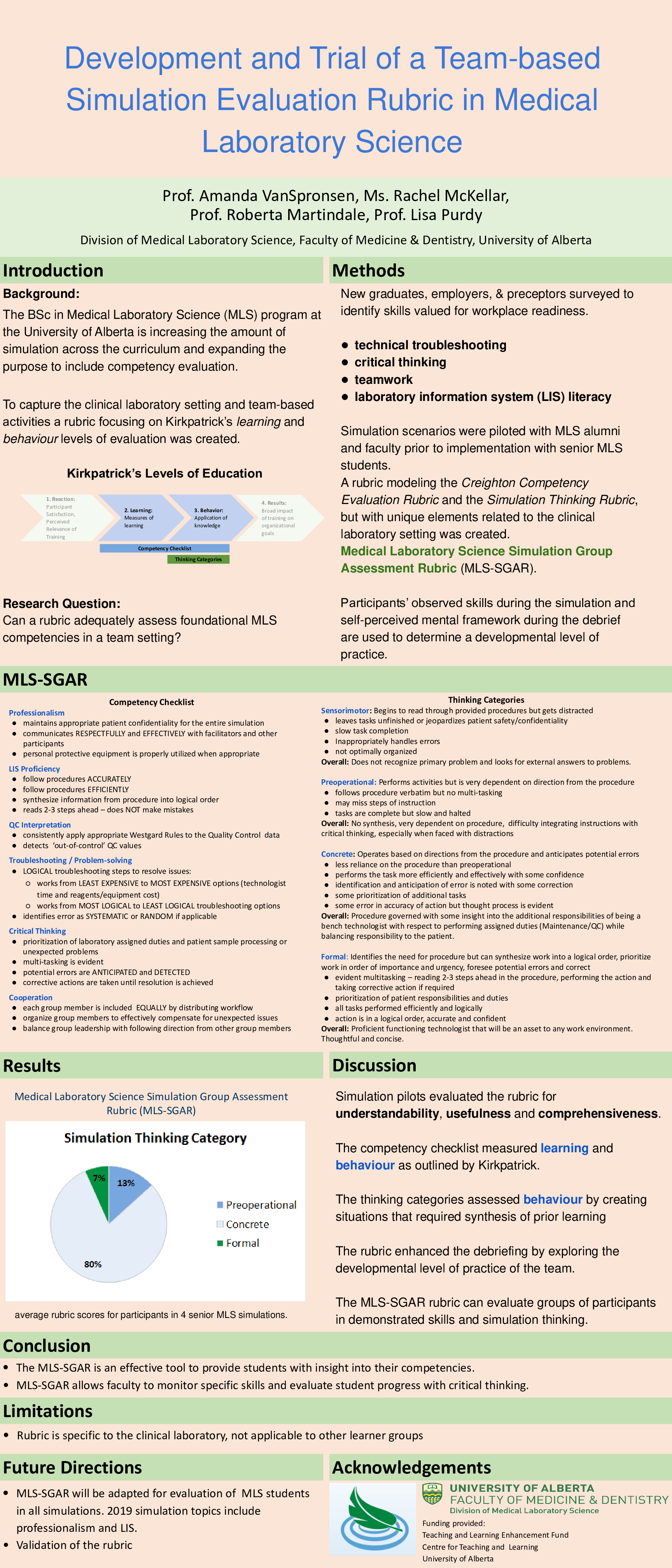
1) Background: The BSc in Medical Laboratory Science (MLS) program at the University of Alberta is increasing the number of simulations provided for students to evaluate competency. However, many simulation assessment tools are unsatisfactory for comprehensively evaluating MLS competencies because of the unique needs of the clinical laboratory setting, specifically for team-based activities. To enhance simulation in the MLS program, a rubric for evaluation and feedback was developed and validated.
2) Research question/hypothesis: Can a rubric be designed that adequately assesses foundational MLS competencies in a team setting?
3) Method: Data were gathered from new graduate, employer, and preceptor surveys to identify potential targets for educational simulation that may enhance workplace readiness. Technical troubleshooting, critical thinking, teamwork, and information system literacy were identified as priority items. In response, simulation scenarios were developed for students in their final year of the MLS program. Criteria were created to evaluate the simulations, and translated to rubric form. This rubric was modeled after the Creighton Competency Evaluation Rubric and the Simulation Thinking Rubric, but contains unique elements related to the clinical laboratory. Participant’s observed skills during the simulation and self-perceived mental framework during the debrief are used to determine a developmental level of practice.
4) Results: The new rubric (MLS Simulation Rubric) can evaluate small groups of simulation participants in two domains: skills and simulation thinking. The rubric was piloted with two groups of MLS alumni. Both the facilitator and alumni evaluated it for understandability, usefulness and comprehensiveness. Minor adjustments were made before implementing it with 4 test groups of senior level MLS students. The rubric was able to enhance the debriefing process and categorize teams by their developmental level of practise.
5) Conclusion: The MLS Simulation Rubric is an effective tool that can provide simulation participants with insight into their competencies in the clinical laboratory setting. In addition, it is a valuable tool for MLS educators as a way to instill MLS specific skills and evaluate student progress.