Abstract
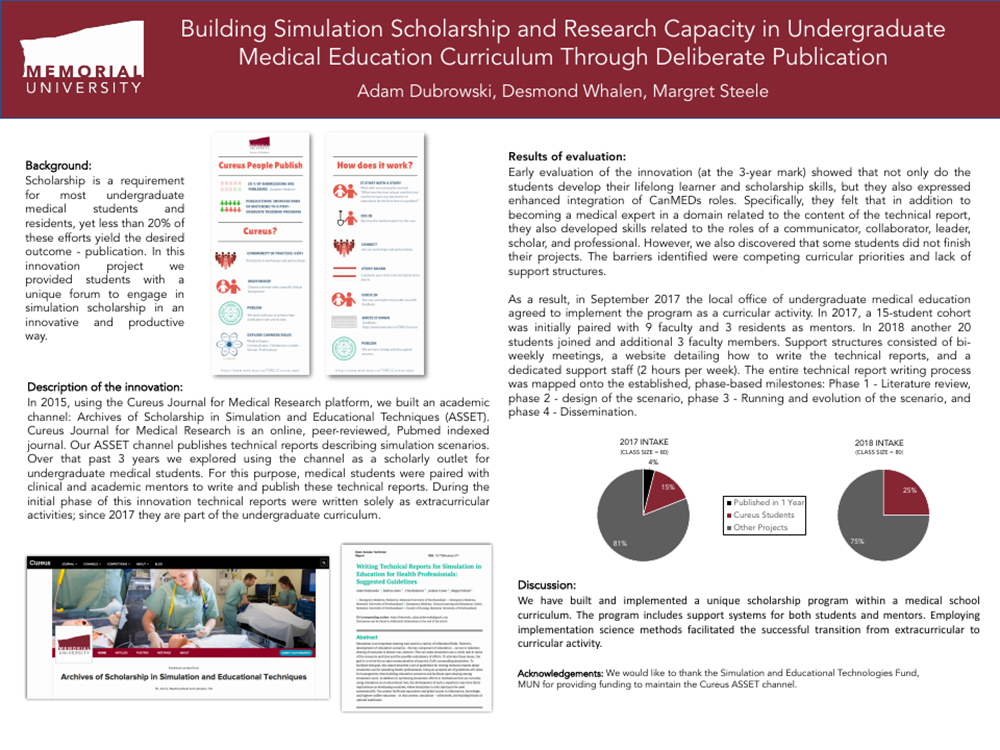
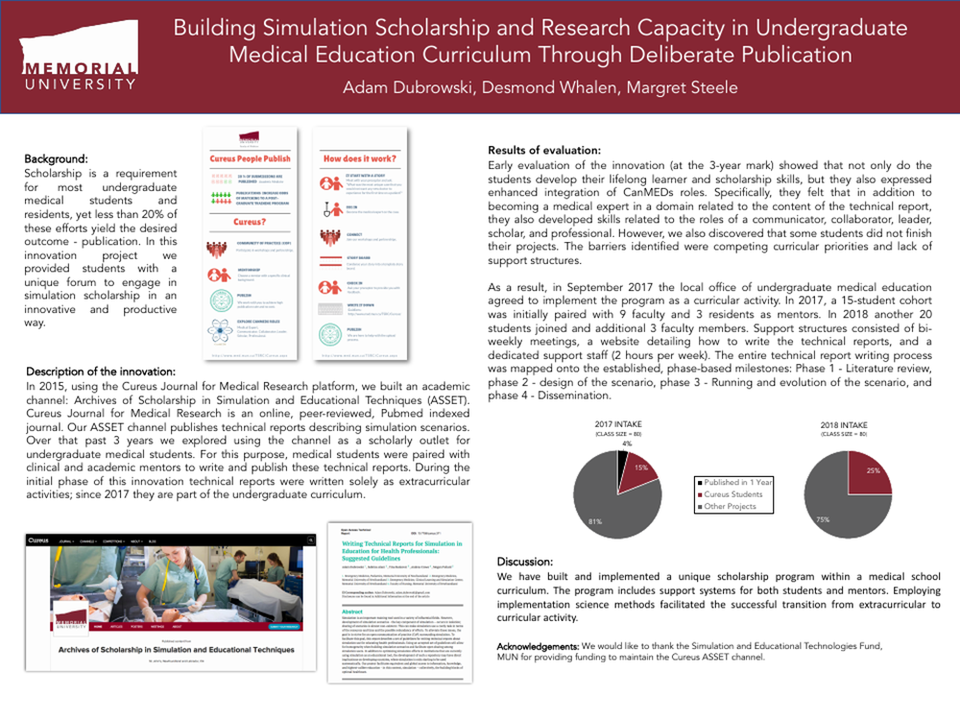
Background: Scholarshipisarequirementformostundergraduatemedicalstudentsandpostgraduateresidents, yet less than20% of these efforts yield the desired outcomes- publications. In this innovation project, we provided students with a unique forum to engage in simulation scholarship in a new and productive way.
Innovation: In2014, using the Cureus Journal for Medical Research, we have built an academic channel: Archives of Scholarship in Simulation and Educational Techniques, which publishes peer-reviewed, PubMed indexed technical reports describing simulation scenarios. Over the past three years we explored the use of this channel as a scholarly outlet for medical students; initially as an extracurricular activity and recently as part of the curriculum.
Evaluation: Early, survey based evaluation of this innovation showed that participating undergraduate medical students develop scholarship skills related to the roles of medical expert, communicator, collaborator, leader, scholar, andprofessional. We also discovered barriers related to competing curricular priorities and lack of support structures.
In September 2017, after a careful assessment of readiness for implementation, the local office of undergraduate medical education agreed to implement the program as a curricular activity. A10-student cohort was initially paired with six faculty members - mentors. Support structures consisted of bi-weekly meetings, a website, and a dedicated support staff (2 hoursaweek). In October, five more students joined with three residents and three clinicians as mentors. The attendance of students and mentors at the bi-weekly meetings was 80% and 75% respectively, and as of March 2018 all students met and exceeded the “phase1” curricular milestone, consisting of literature review and introduction to the technical report. Final evaluation is planned for July 2018.
Discussion: We have built and implemented a unique scholarship program within a medical school curriculum. The program includes support systems for both students and mentors. Employing implementation science methods facilitated the successful transition from extracurricular to curricular activity.