Abstract
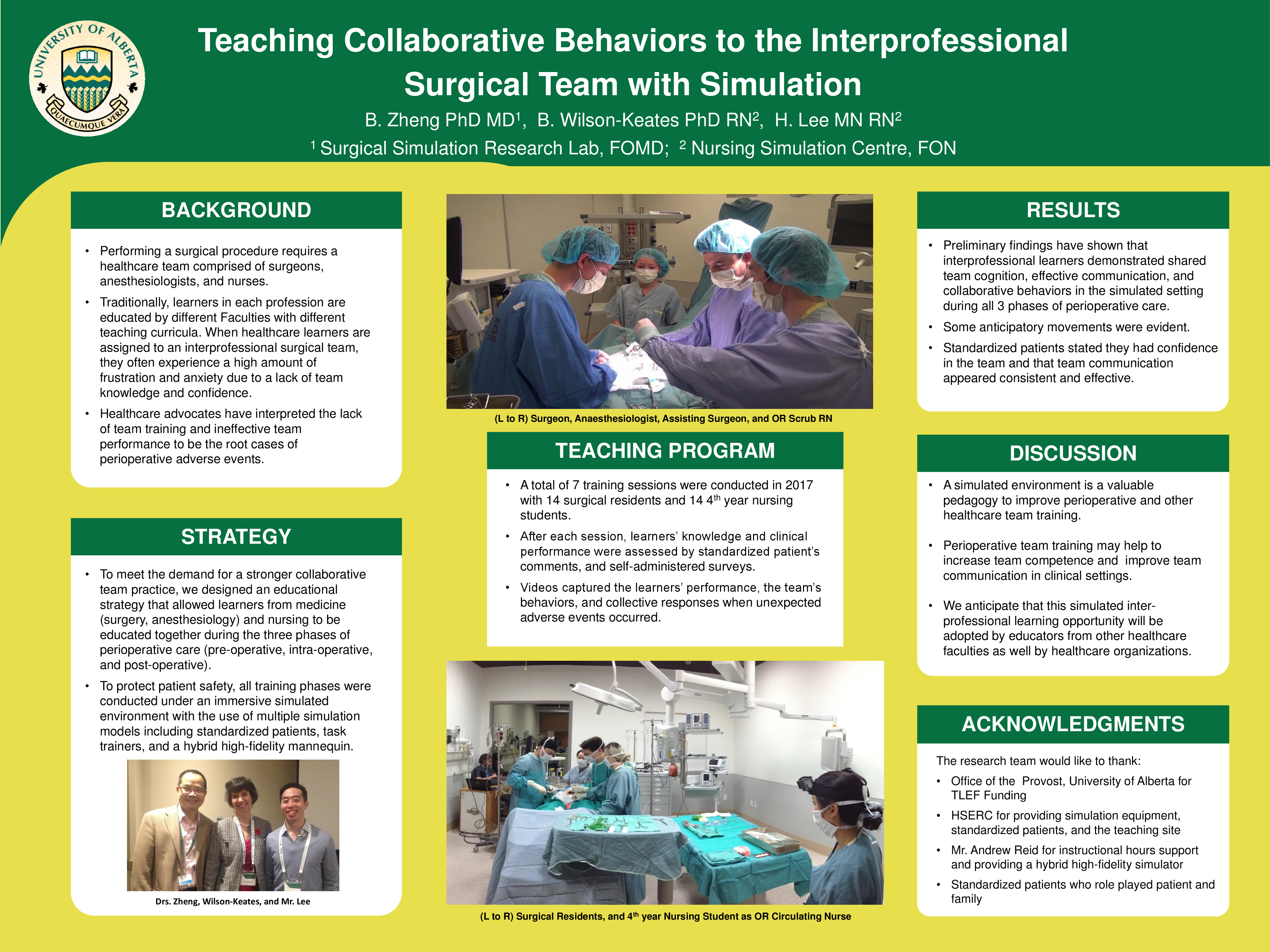
Background: Intraoperative team members may lack non-technical behaviors1,2. As insufficient intraoperative team behaviors is a root cause of operating room errors3, educational opportunities need to be developed for students to form collaborative intraoperative teams.
Research question/Hypothesis: Guided by a team development framework1, the research evaluated students' intraoperative team behaviors during a simulated operation.
Method: An open cholecystectomy was performed in a simulated operating room. A high-fidelity mannequin displayed vital signs. Surgery was performed inside a training box with an animal gallbladder, which was placed in the mannequin’s abdomen. Team members also completed the OR safety checklist and surgical instrument count, and followed aseptic and sterile rules. An anaesthesiology resident would administer general anesthesia with a simulated gas machine, and monitor the patient's status. Multiple cameras recorded team behaviors and from the recordings, researchers used Observational Teamwork Assessment for Surgery (OTAS)4 to evaluate team behaviors.
Results: Six teams participated, each consisting of 2 second year surgical residents and 2 fourth year nursing students. All teams demonstrated effective communication. Team coordination ranged from highly effective to absent responses. Situational awareness, specifically hypotension treatment or the final instrument count, was demonstrated in two teams, but was absent in the remaining teams. Situationally aware members performed more anticipatory movements, thereby demonstrating stronger collaboration. Due to a scheduling conflict, an anaesthesiologist was present but was not a research participant.
Conclusion: The intraoperative teams demonstrated inconsistent behaviors, ranging from effective to absent. This study is the foundation for future studies to help develop consistently collaborative intraoperative teams. Future research will involve the the participation of anaesthesiology residents to increase simulation fidelity.
References:
- Komazawa N, et al. 2016. Interprofessional simulation training for perioperative management team development and patient safety. J Periop Prac 26: 250- 253.
- Agha RA, et al 2015. The role of non-technical skills in surgery. Ann Med Surg 4(4): 422-427.
- Gilbert JH, et al 2010. A WHO report: Framework for action on interprofessional education and collaborative practice. J Allied Health 39 Suppl 1: 196-197.
- Healey AN, et al 2004. Developing observational measures of performance in surgical teams. Qual Safety Health Care, 13(suppl 1), i33-i40.