Abstract
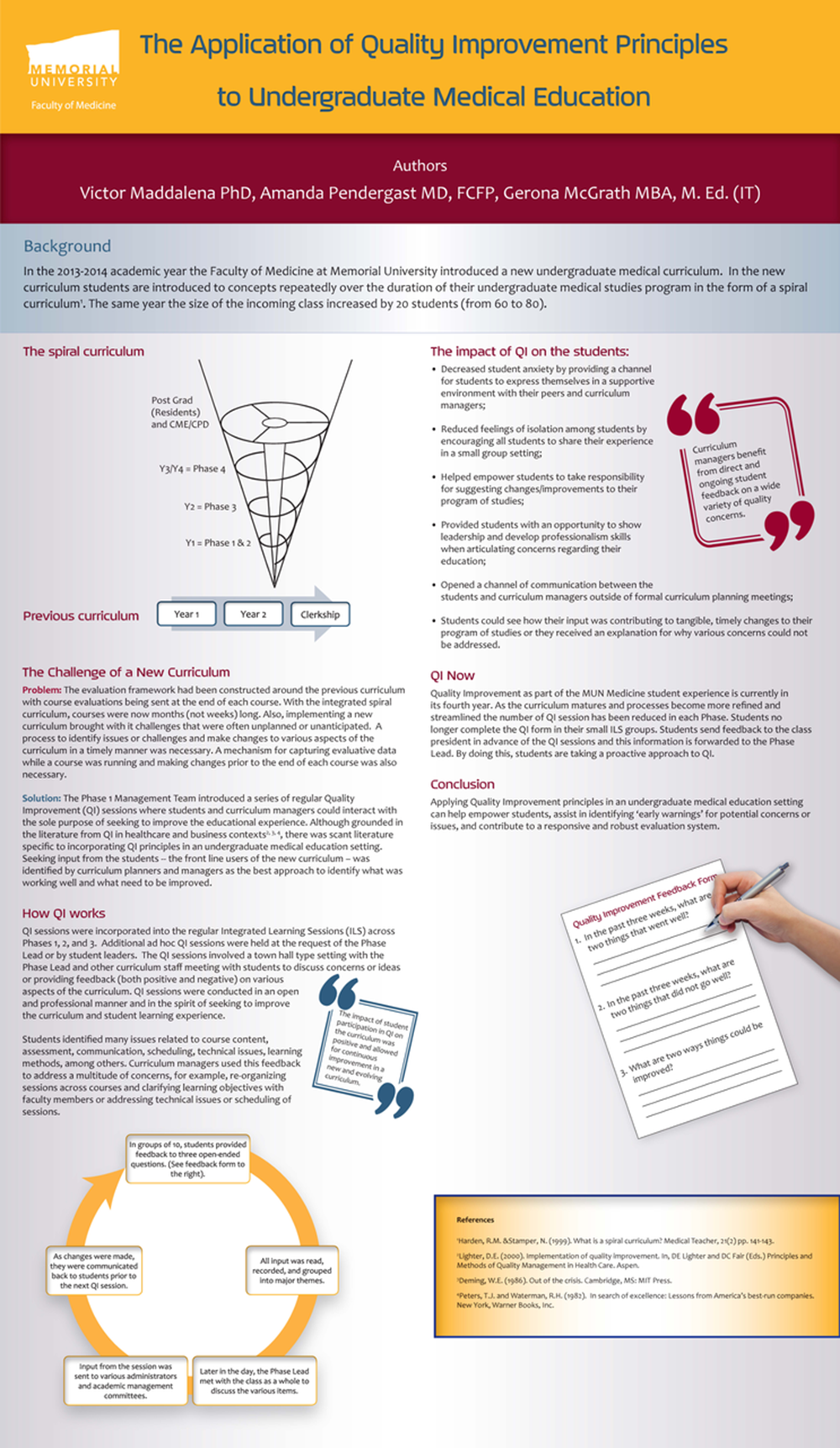
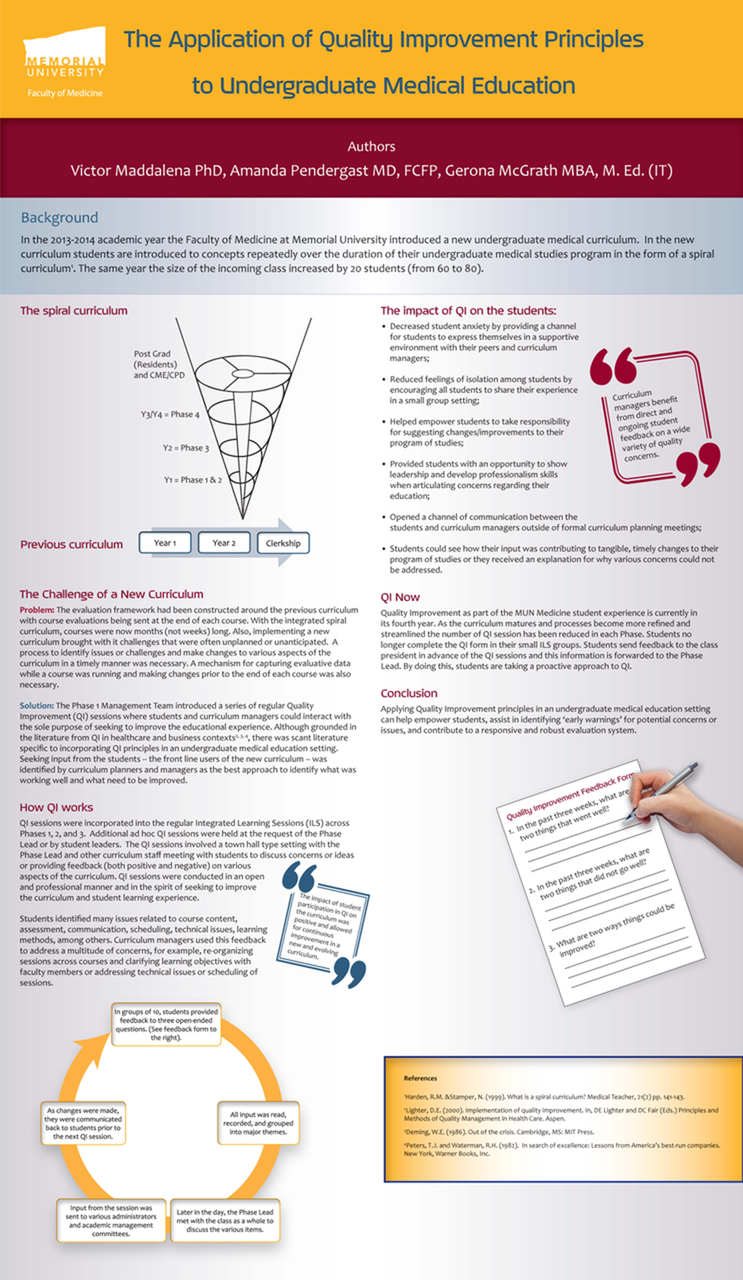
Purpose: The purpose of this poster is to highlight one of the innovative additions to program evaluation made to address the needs of a spiral curriculum in an undergraduate medical education setting.
Methods: Although grounded in quality improvement literature in both healthcare and business contexts, the project did not follow a research methodology. Rather the purpose of the poster is to explain how quality improvement principles were applied in one context and the related outcomes.
Results: The Quality Improvement sessions provided administrators with a mechanism to gather student feedback efficiently and facilitated timely feedback to students. The more important outcomes from QI were:
- decreased student anxiety by providing a channel to express themselves in a supportive environment with their peers
- reduced feelings of isolation by seeing that peers were having many of the same issues/concerns
- students could see that their concerns were being heard and acted upon or were told why a particular situation could not change
- helped give students a sense of empowerment at a time when they were likely overwhelmed with both the pressures of medical school and the uncertainty around expectations on them
- the sessions also provided an opportunity for students to show leadership and develop professionalism skills such that they were able to articulate criticisms in a collegial, respectful manner
- the QI sessions also afforded administrators and curriculum leaders the opportunity to identify and resolve curriculum or student issues in a timely manner.
Conclusions: Applying quality improvement principles to undergraduate medical education can lead to higher levels of satisfaction among students, greater student participation, and more timely feedback to administrators and curriculum leaders.