Abstract
Introduction
Debriefing is one of the core elements of simulation-based training. Currently, the availability of training in debriefing is limited in many parts of the world. Developing debriefing skills typically involves either self-directed learning and/or traveling to a simulation centre abroad. Additionally, there are limited opportunities for ongoing feedback and debriefing skill development for faculty members. As a first step of developing a tele-curriculum for simulation faculty development in Latvia, we explored the feasibility of using a tele-co-debriefing model (a remotely located international colleague co-debriefing and debriefing-the-debriefer).
Methods
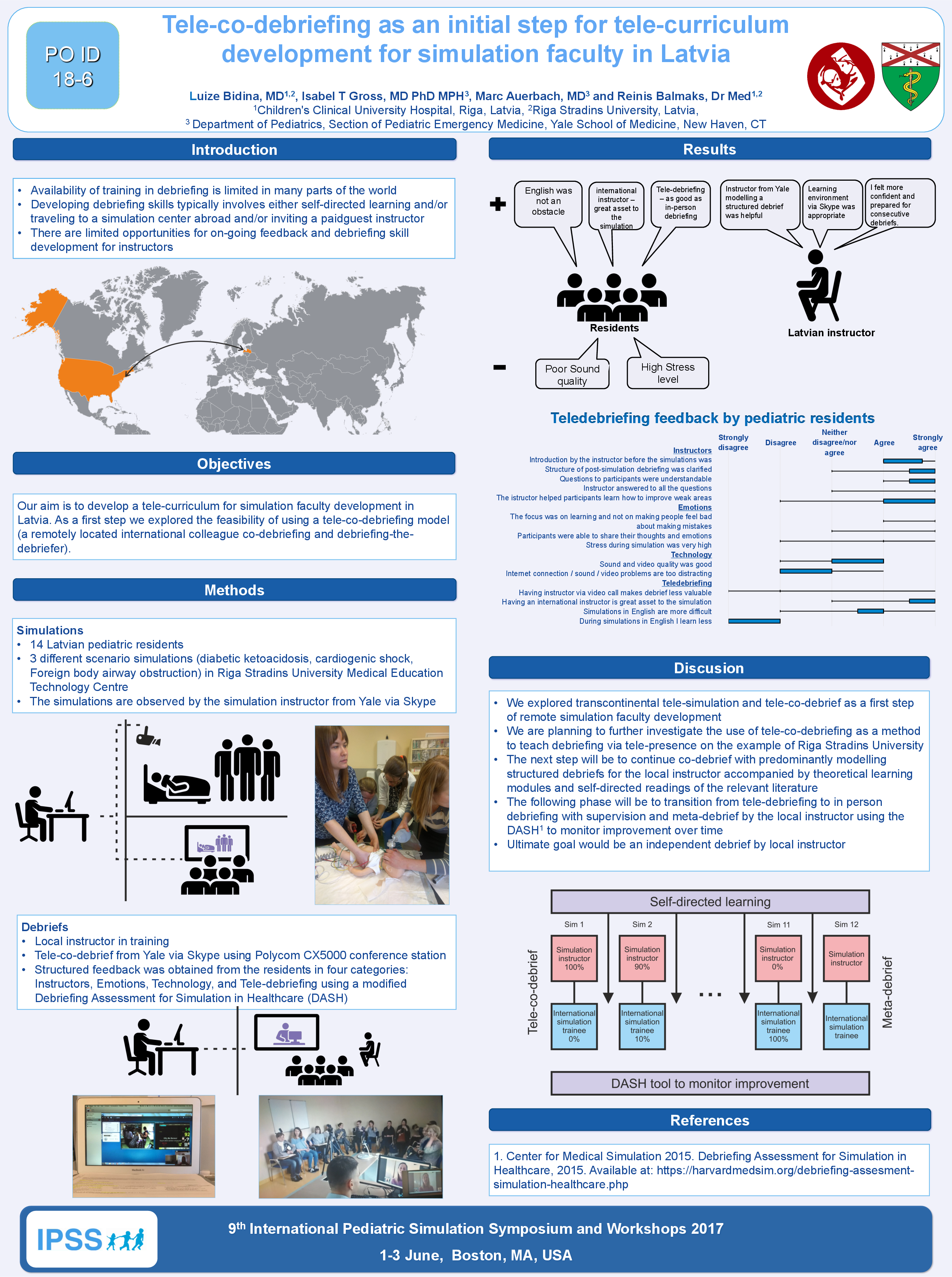
One simulation instructor in training from Riga Stradins University in Latvia co-debriefed with one simulation instructor from Yale School of Medicine. 14 Latvian pediatric residents participated in three different scenario simulations in Riga Stradins University Medical Education Technology Centre. The simulations were observed and the debrief was led by the simulation instructor from Yale via Skype modelling a debrief for the instructor in training from Riga. After the tele-debriefs a structured feedback was obtained from the residents in four categories: Instructors, Emotions, Technology, and Tele-debriefing.
Results
Three simulation sessions were run successfully from Connecticut in Latvia together with local faculty. Feedback by pediatric residents showed that English was not an obstacle for simulations, debriefing or learning for Latvian trainees. Tele-debriefing was valued as good as in-person debriefing and participants reported that having an international instructor was a great asset to the simulation. However, areas for improvement were identified: sound quality was particularly important for the learning and stress level was high among the participants. The simulation instructor in training perceived the simulation instructor from Yale modelling a structured debrief as helpful, the learning environment via Skype was perceived as appropriate and the Latvian instructor felt more confident and prepared for consecutive debriefs.
Discussion
We explored transcontinental tele-simulation and tele-co-debrief as a first step of remote simulation faculty development. We are planning to further investigate the use of tele-co-debriefing as a method to teach debriefing via tele-presence on the example of Riga Stradins University. The next step will be to continue co-debrief with predominantly modelling structured debriefs for the international simulation trainee accompanied by theoretical learning modules and self-directed readings of the relevant literature. The next phase will be to transition from tele-debriefing to in person debriefing with supervision and meta-debrief by the international instructor using the DASH to monitor improvement over time. This project is an example of how technology can be used to facilitate simulation instructor training for areas of where no simulation courses are available, where resources are limited, or where faculty members are unable to travel.