The Role of Drebrin in Skeletal Muscle Regeneration and Repair
Abstract
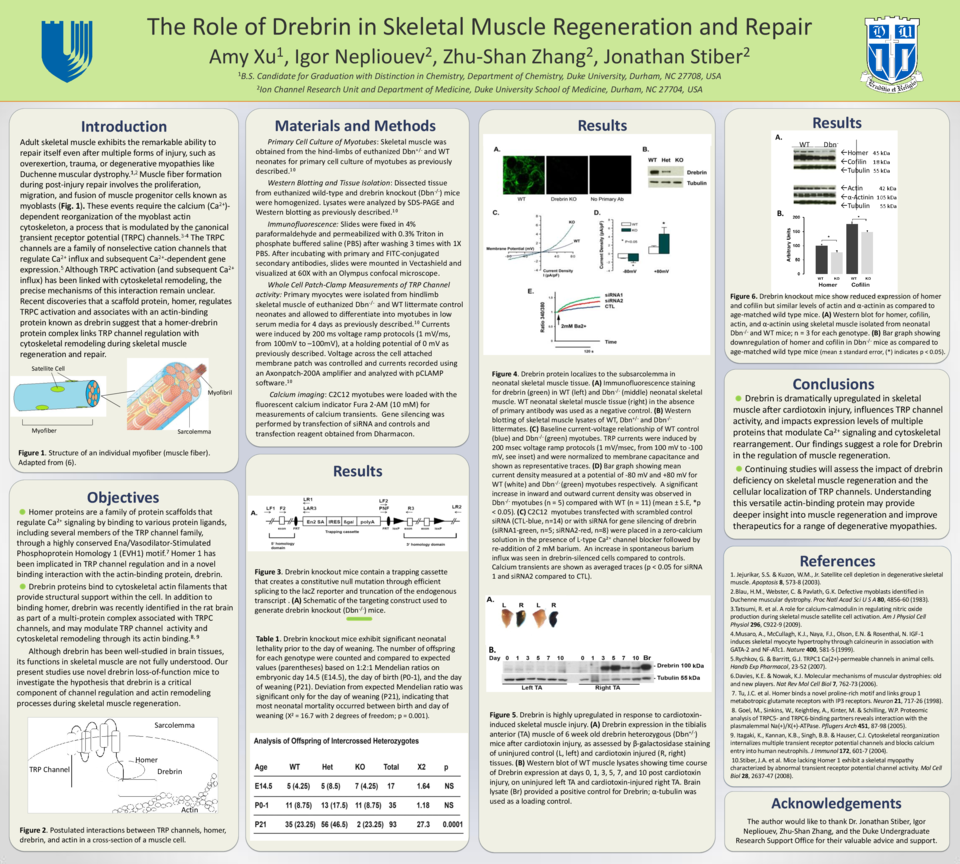
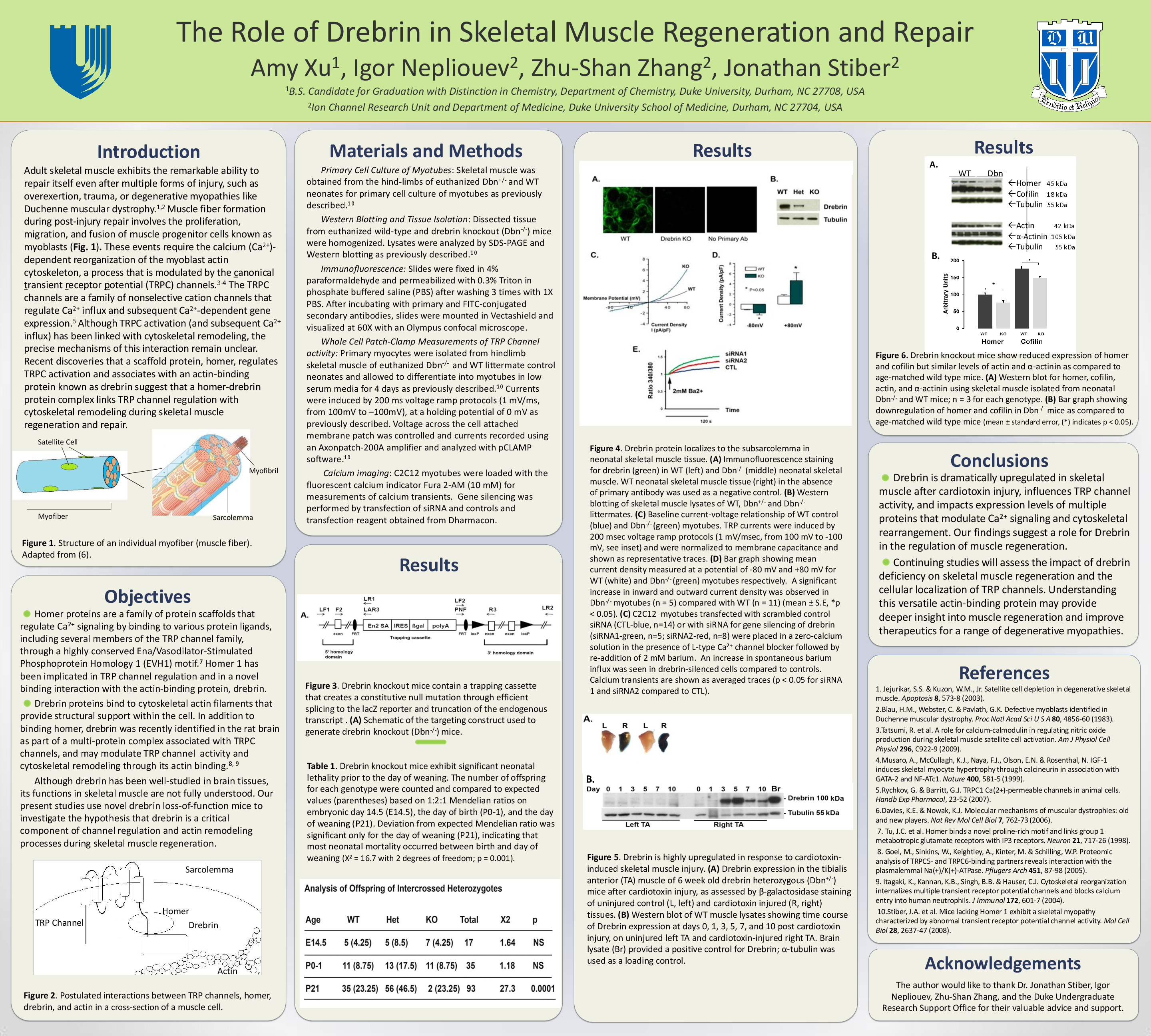
Muscle fiber formation during development and post-injury repair involves the proliferation, migration, and fusion of muscle stem cells known as myoblasts. These events necessitate the calcium (Ca2+)-dependent reorganization of the myoblast actin cytoskeleton, a process that is modulated by diverse proteins including the Transient Receptor Potential (TRP) channels, Homer scaffold proteins, and various actin-binding proteins. However, the detailed mechanisms linking TRP channel activation (and subsequent Ca2+ influx) with cytoskeletal remodeling remain unclear. Our recent findings indicate that the actin-binding protein drebrin is localized in the subsarcolemma of skeletal muscle tissue and is dramatically upregulated after cardiotoxin injury. Mice deficient in drebrin were viable, but showed significant lethality immediately after birth. As drebrin was also found to impact expression levels of multiple proteins involved in Ca2+ signaling and cytoskeletal rearrangement, we postulate that drebrin is a critical component of channel regulation and actin remodeling processes. Understanding drebrin’s various functions may provide deeper insight into muscle fiber development and repair, and improve current therapies for a range of degenerative myopathies.
Related articles