Role of Social Media in the Transition Process for Adolescents with Chronic Illnesses
Abstract
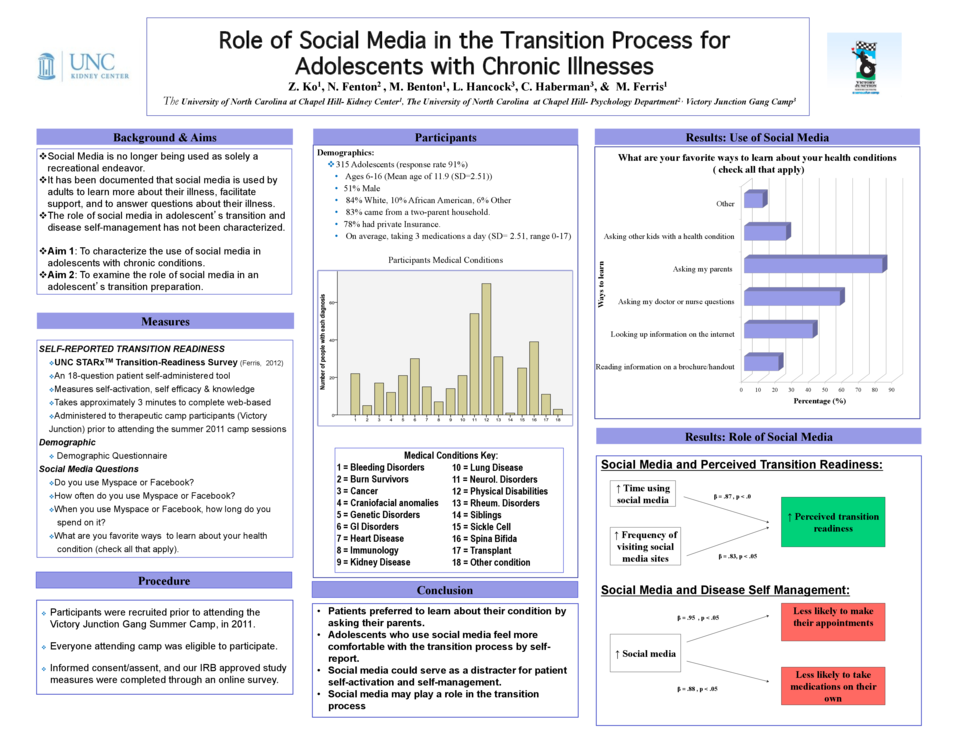
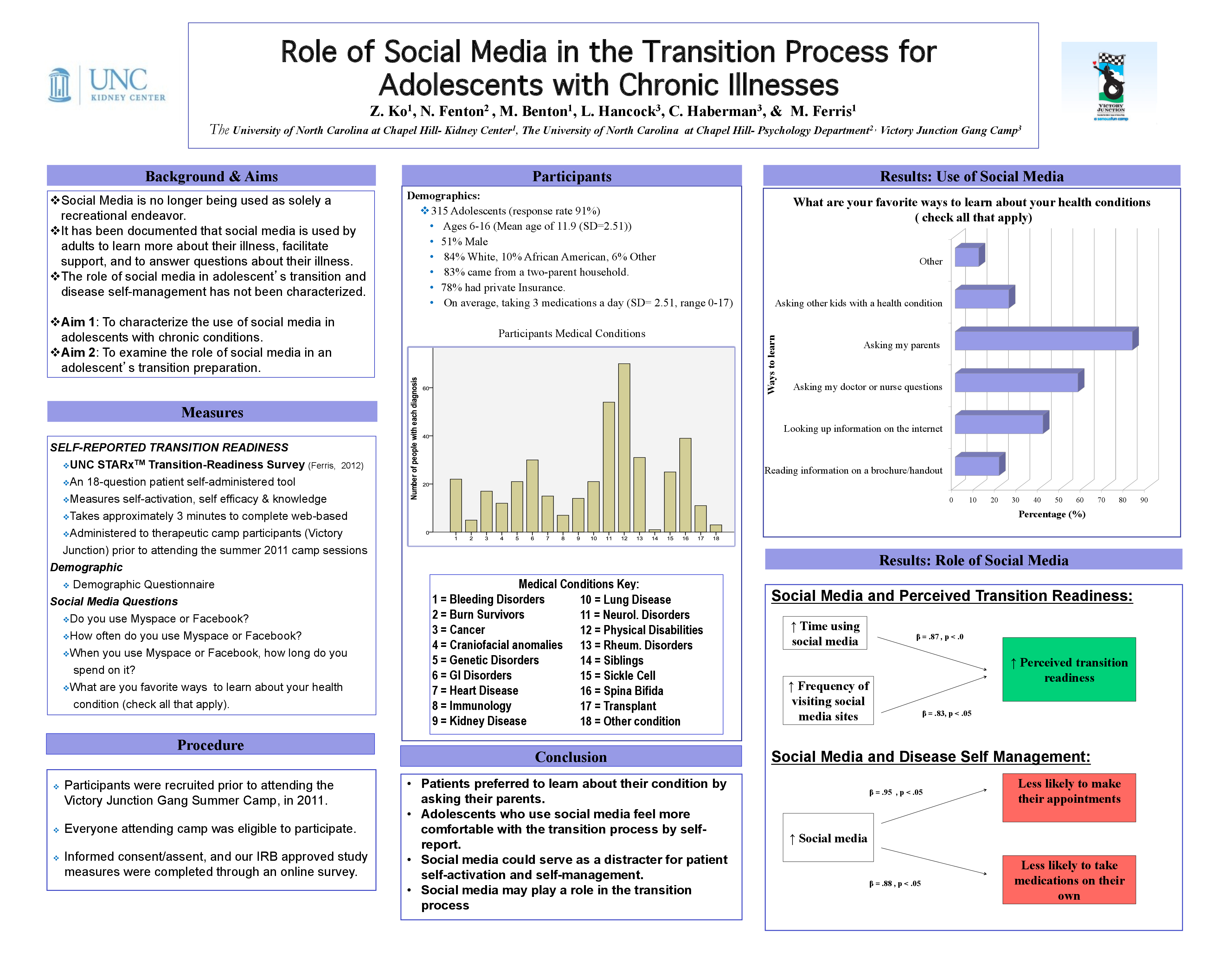
Background: Social media is no longer being used as solely a recreational endeavor. It has been documented that adult patients use social media as a way to learn more about their illness, facilitate social support, and as a resource to answer questions about their illness (Greene, Choudhry, Kilabuk, & Shrank, 2010). However, the role of social media in adolescent’s transition and disease self-management has not been characterized.
Aims: This study aimed to characterize the use of social media in adolescents with chronic conditions. This study also aimed to examine the role of social media in an adolescent’s transition process.
Methods: Participants were recruited from the therapeutic Victory Junction Camp prior to the start of the 2011 camp season, through a de-identified web-based engine. IRB-approved measures included: the smooth transition to adulthood with treatment 18-question survey (STARx), demographic questions, and four questions regarding social media. Analyses were completed in SPSS and consisted of correlations and descriptive statistics.
Participants: Final analysis included 315 adolescents (response rate 91%) ages 6-16 representing several conditions. Their mean age was 11.9 (SD=2.51); 51% Males; 84% Whites, 10% Blacks; 6% other; 83% came from a two parent household; 78% had private insurance. On average these children were taking 3 medications each day (SD=2.88, range 0-17).
Results: About 45% of the participants used Facebook or MySpace everyday and 32% reported when on Facebook/Myspace, they spend one to two hours using it. Adolescents perceived the transition from pediatric to adult health-care was going to be easier when they both spent more time on Facebook/Myspace (r=0.22, p= 0.01) and were more frequently on Facebook/Myspace (r=0.19, p=0.01). Additionally, when patients spent more time on Facebook/Myspace, they felt it was easier to talk to their doctors (r=0.18, p= 0.05). However, the patients who used Facebook/Myspace were less likely to make their own appointments (r= -0.17, p= 0.01) or take their medications (r= -0.17, p= 0.01).
Conclusions: Our findings indicate that social media may play a role in the transition process. Adolescents who use social media feel more comfortable with the transition process by self-report. Conversely, social media could serve as a distracter for patient self-activation and self-management (make appointments and take medications).
Related articles