The Supine, Gravity Assisted Overhead Motion Protocol Minimizes Ulnohumeral Distraction In Unstable Elbows
Abstract
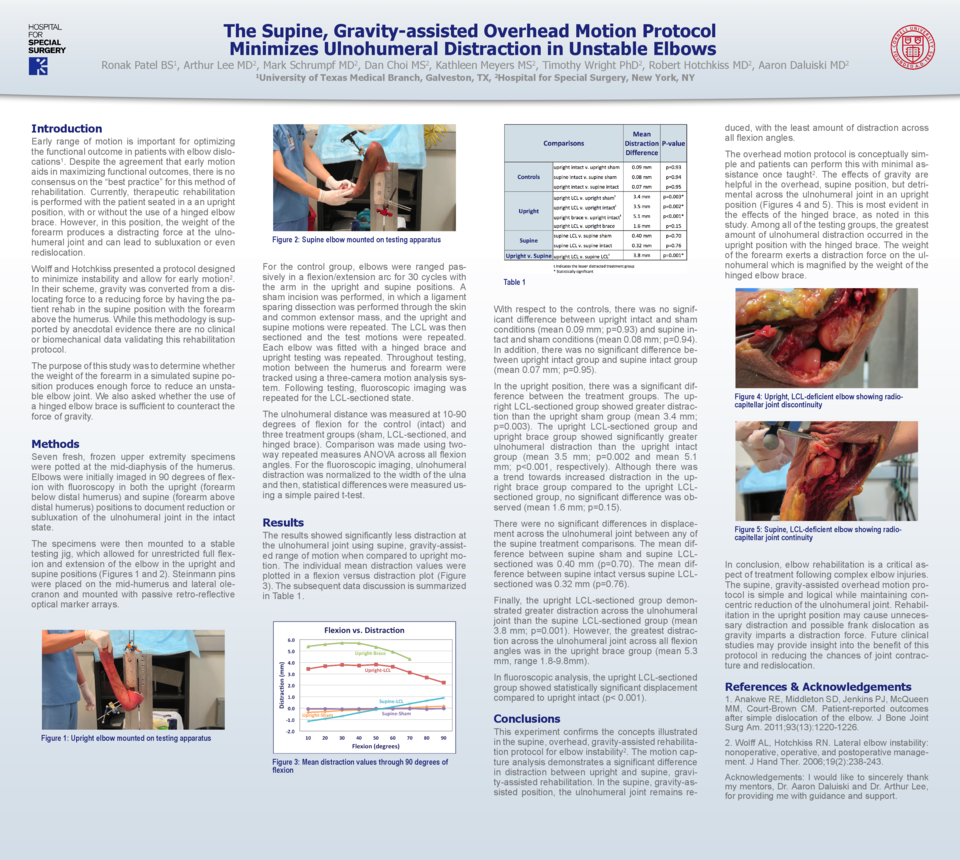
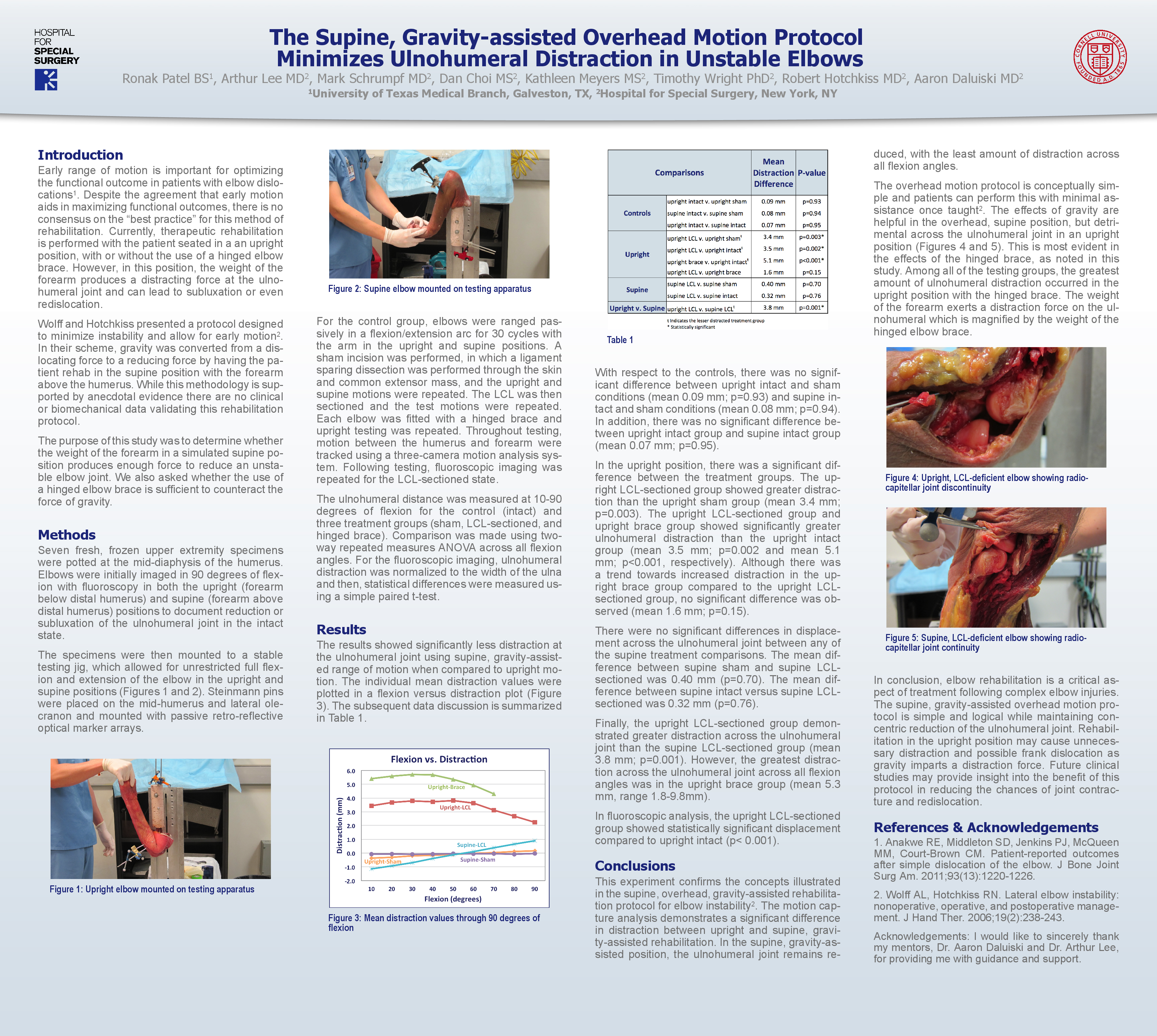
Early range of motion after destabilizing elbow trauma is crucial for optimal functional outcomes. This was a biomechanical study investigating ulnohumeral distraction across an unstable, dislocated elbow model (LCL-sectioned) with three types of early range of motion protocols: supine, gravity assisted overhead motion; seated upright range of motion; and seated upright range of motion with a hinged elbow brace. Seven cadaveric elbows were affixed with a 3D motion capture system. Ulnohumeral distance was measured through 10-90 degrees of flexion for intact, sham, and LCL-sectioned conditions using the three motion protocols. There was no significant difference between supine intact and sham conditions and upright intact and sham conditions. The supine intact and supine LCL-sectioned elbows had no significant difference in distraction (p=0.76), while upright LCL-sectioned elbows showed an increased distraction compared to upright intact elbows (p = 0.002). Finally, there was significantly more displacement across the ulnohumeral joint in the upright LCL-sectioned condition compared to the supine LCL-sectioned condition (p=0.001). The greatest ulnohumeral distraction occurred in the seated upright range of motion with an elbow brace (range 2.5 to 5.6 mm). The supine, gravity assisted overhead motion protocol is a safe protocol for unstable elbows. The supine positions results in the least amount of ulnohumeral distraction through 10-90 degrees of flexion. The upright and upright with brace protocols exhibited the only ulnohumeral distraction distances that may have resulted in redislocation.
Related articles