Abstract
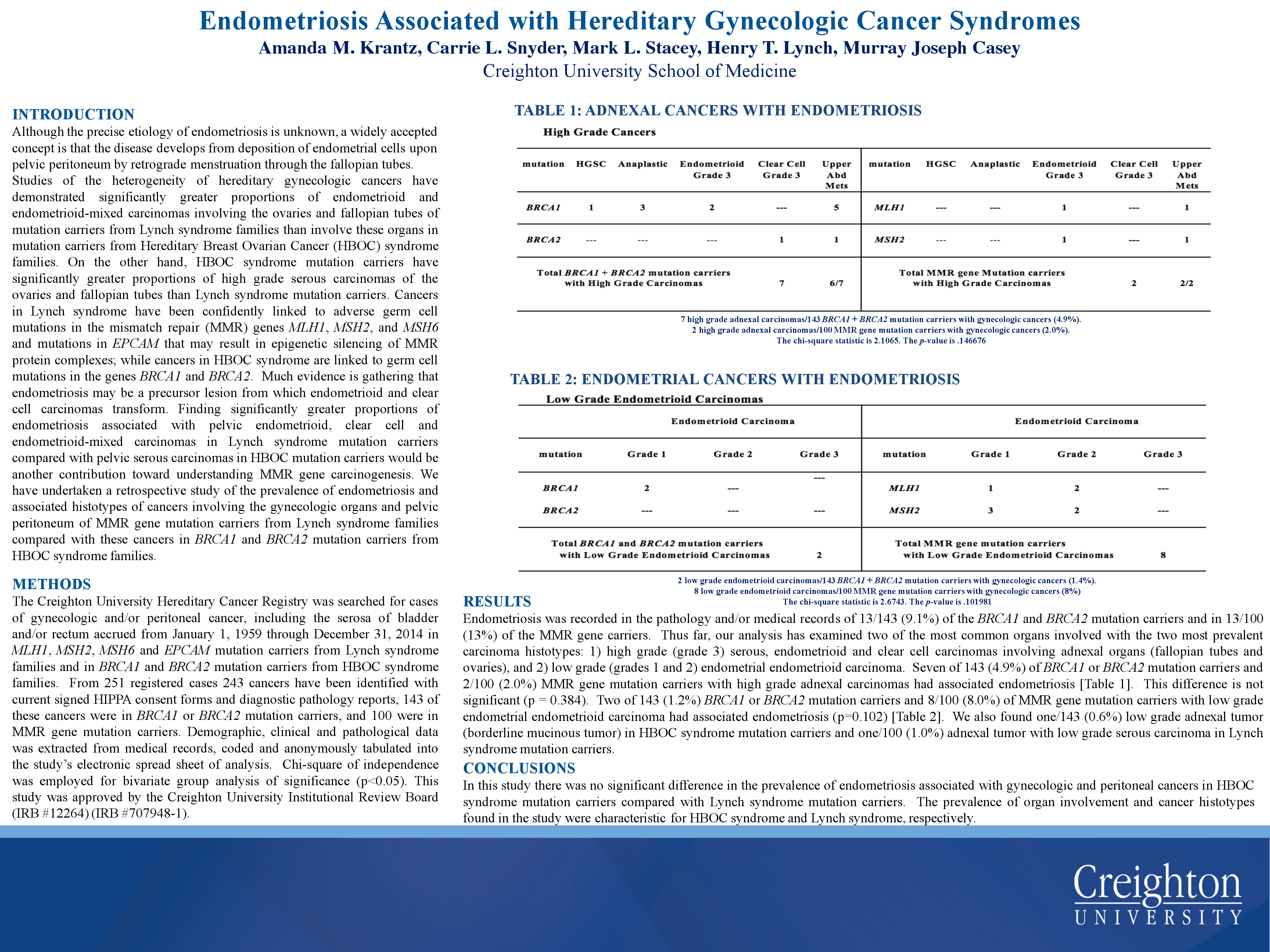
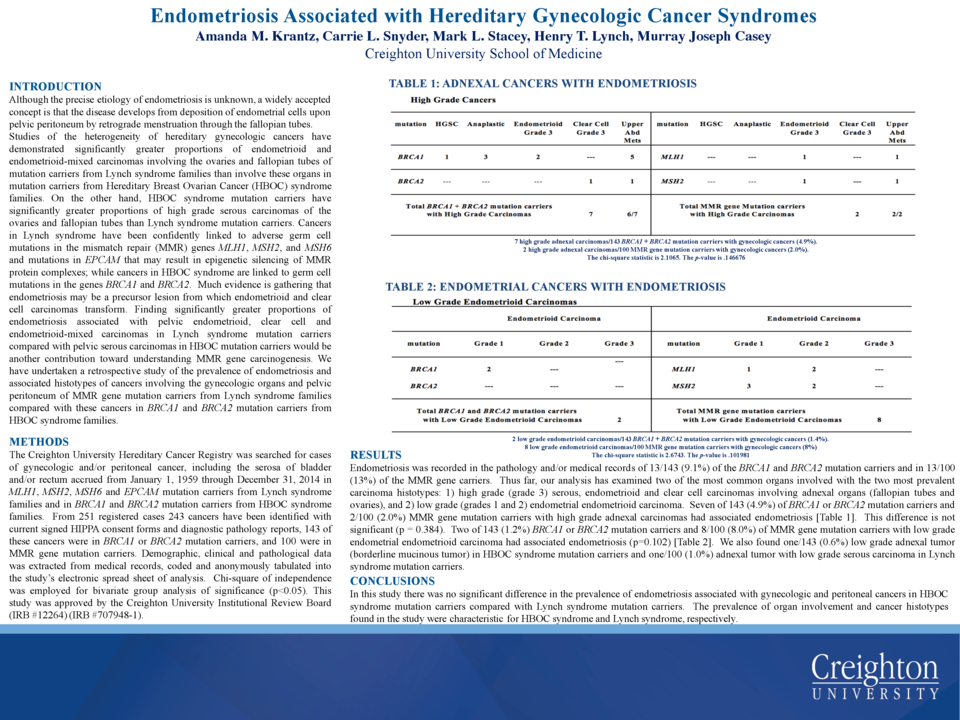
Although the precise etiology of endometriosis is unknown, a widely accepted concept is that the disease develops from deposition of endometrial cells upon pelvic peritoneum by retrograde menstruation through the fallopian tubes. Much evidence is gathering that endometriosis may be a precursor lesion from which endometrioid and clear cell carcinomas transform. We have undertaken a retrospective study of the prevalence of endometriosis and associated histotypes of cancers involving the gynecologic organs and pelvic peritoneum of MMR gene mutation carriers from Lynch syndrome families compared with these cancers in BRCA1 and BRCA2 mutation carriers from HBOC syndrome families. Endometriosis was recorded in the pathology and/or medical records of 13/143 (9.1%) of the BRCA1 and BRCA2 mutation carriers and in 13/100 (13%) of the MMR gene carriers. Thus far, our analysis has examined two of the most common organs involved with the two most prevalent carcinoma histotypes: 1) high grade (grade 3) serous, endometrioid and clear cell carcinomas involving adnexal organs (fallopian tubes and ovaries), and 2) low grade (grades 1 and 2) endometrial endometrioid carcinoma. Seven of 143 (4.9%) of BRCA1 or BRCA2 mutation carriers and 2/100 (2.0%) MMR gene mutation carriers with high grade adnexal carcinomas had associated endometriosis [Table 1]. This difference is not significant (p = 0.384). Two of 143 (1.2%) BRCA1 or BRCA2 mutation carriers and 8/100 (8.0%) of MMR gene mutation carriers with low grade endometrial endometrioid carcinoma had associated endometriosis (p=0.102) [Table 2]. We also found one/143 (0.6%) low grade adnexal tumor (borderline mucinous tumor) in HBOC syndrome mutation carriers and one/100 (1.0%) adnexal tumor with low grade serous carcinoma in Lynch syndrome mutation carriers. In this study there was no significant difference in the prevalence of endometriosis associated with gynecologic and peritoneal cancers in HBOC syndrome mutation carriers compared with Lynch syndrome mutation carriers. The prevalence of organ involvement and cancer histotypes found in the study were characteristic for HBOC syndrome and Lynch syndrome, respectively.