Abstract
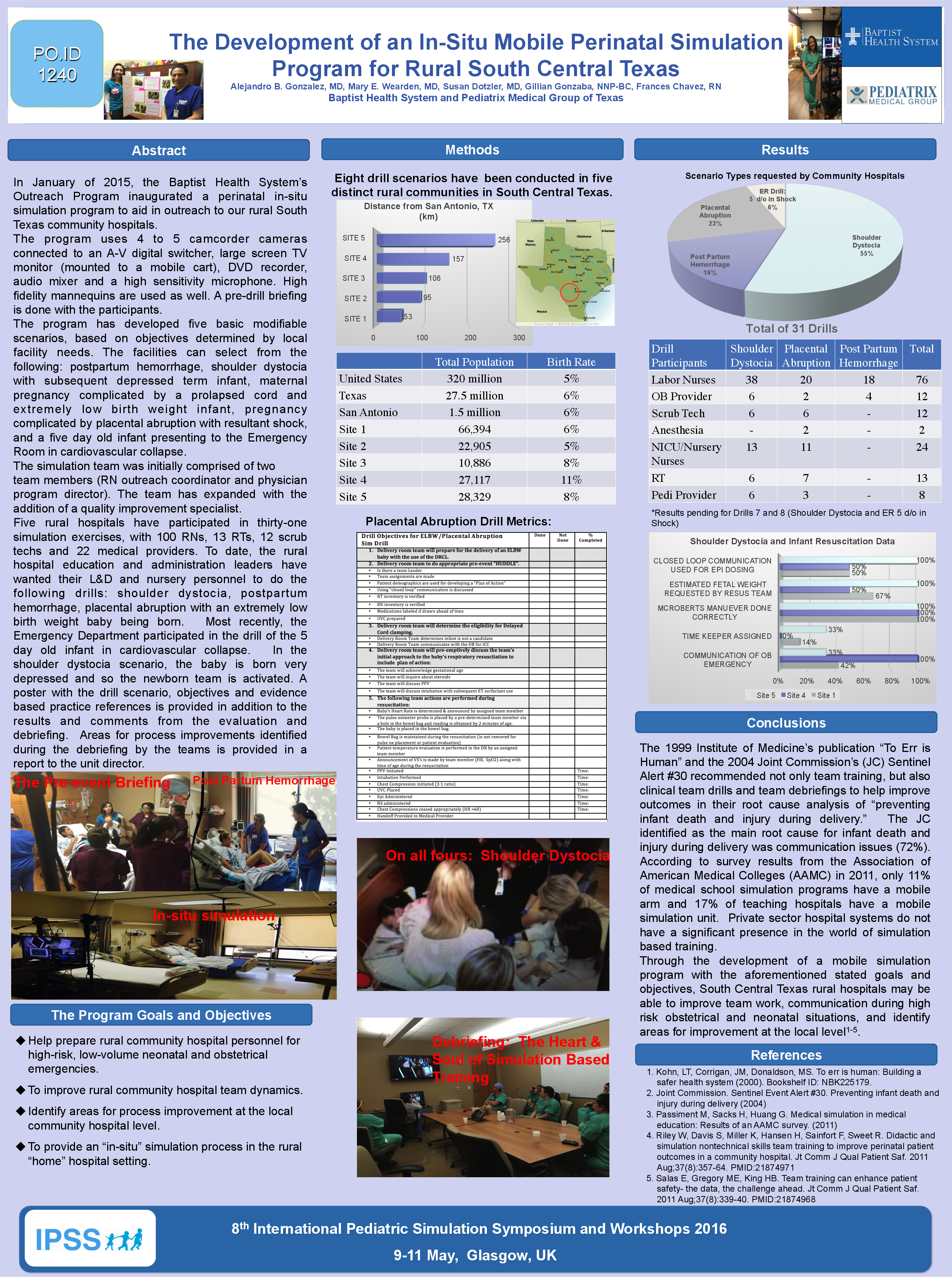
In January of 2015, the Baptist Health System’s Outreach Program inaugurated a perinatal in-situ simulation program to aid in outreach to our rural South Texas community hospitals. The goals of the program are: 1. To help prepare rural community hospital personnel for high-risk, low-volume neonatal and obstetrical emergencies. 2. Focus on team dynamics. 3. Identify areas for process improvement at the local level. 4. To provide an “in-situ” simulation process & experience in their own “home” hospital.
The program uses 4 to 5 camcorder cameras connected to an A-V digital switcher, large screen TV monitor (mounted to a mobile cart), DVD recorder, audio mixer and a high sensitivity microphone. Infant high fidelity mannequins & adult actors are used. A pre-drill briefing is done with the participants. The program has developed five basic modifiable scenarios, based on objectives determined by local facility needs. The facilities select from the following scenarios: postpartum hemorrhage, shoulder dystocia with subsequent depressed term infant, maternal pregnancy complicated by a prolapsed cord and extremely low birthweight infant, pregnancy complicated by placental abruption with resultant shock, and a five day old infant presenting to the Emergency Room in cardiovascular collapse. The simulation team was initially comprised of an RN outreach coordinator and physician program director. The team has expanded with the addition of a quality improvement specialist. Five rural hospitals have participated in thirty-one simulation exercises, with 100 RNs, 13 RTs, 12 Scrub Techs and 22 medical providers. To date, the rural hospital teams have performed the following scenarios: shoulder dystocia, postpartum hemorrhage, placental abruption & ER drills. In the shoulder dystocia & placental abruption scenario, the baby is born very depressed and so the newborn team is activated.
A poster with the drill scenario, objectives and evidence based practice references is provided to the participating hospital units, in addition to the results and comments from the evaluation and debriefing. Areas for process improvements identified during the debriefing by the teams is provided in a report to the unit director.
Through the development of this program, South Central Texas rural hospitals may be able to improve team work and communication during high risk obstetrical and neonatal situations, and identify areas for improvement at the local level.